Guide
The Best Middleweight Supersport Motorcycles of 2026
4 min read
The best sportbikes of 2026, ranked, from track-ready superbikes to friendly supersports you can actually live with on the road.
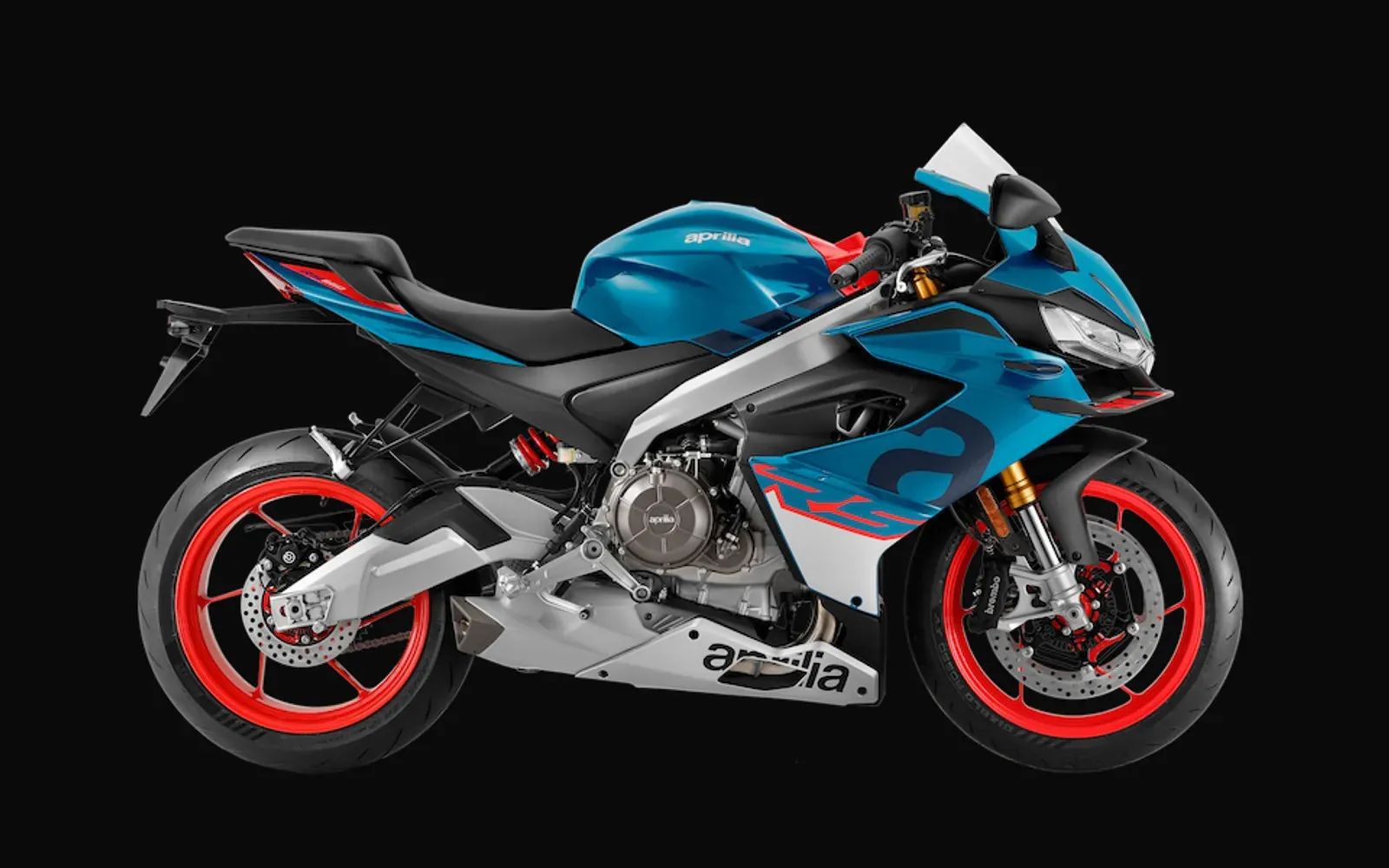
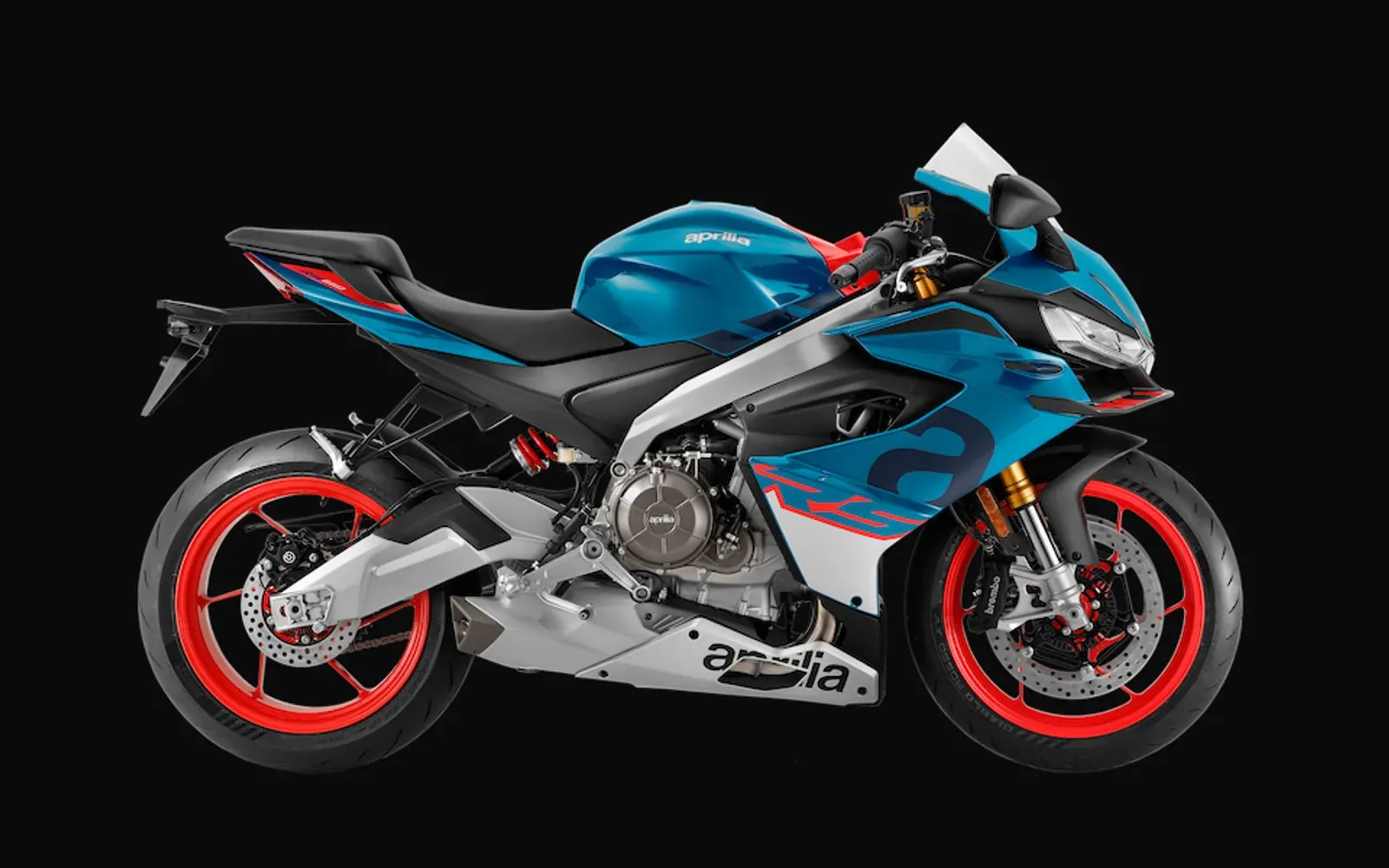
Arguably the best all-round sportbike on sale. Fast enough to thrill, light enough to flick, and comfortable enough to ride for hours.
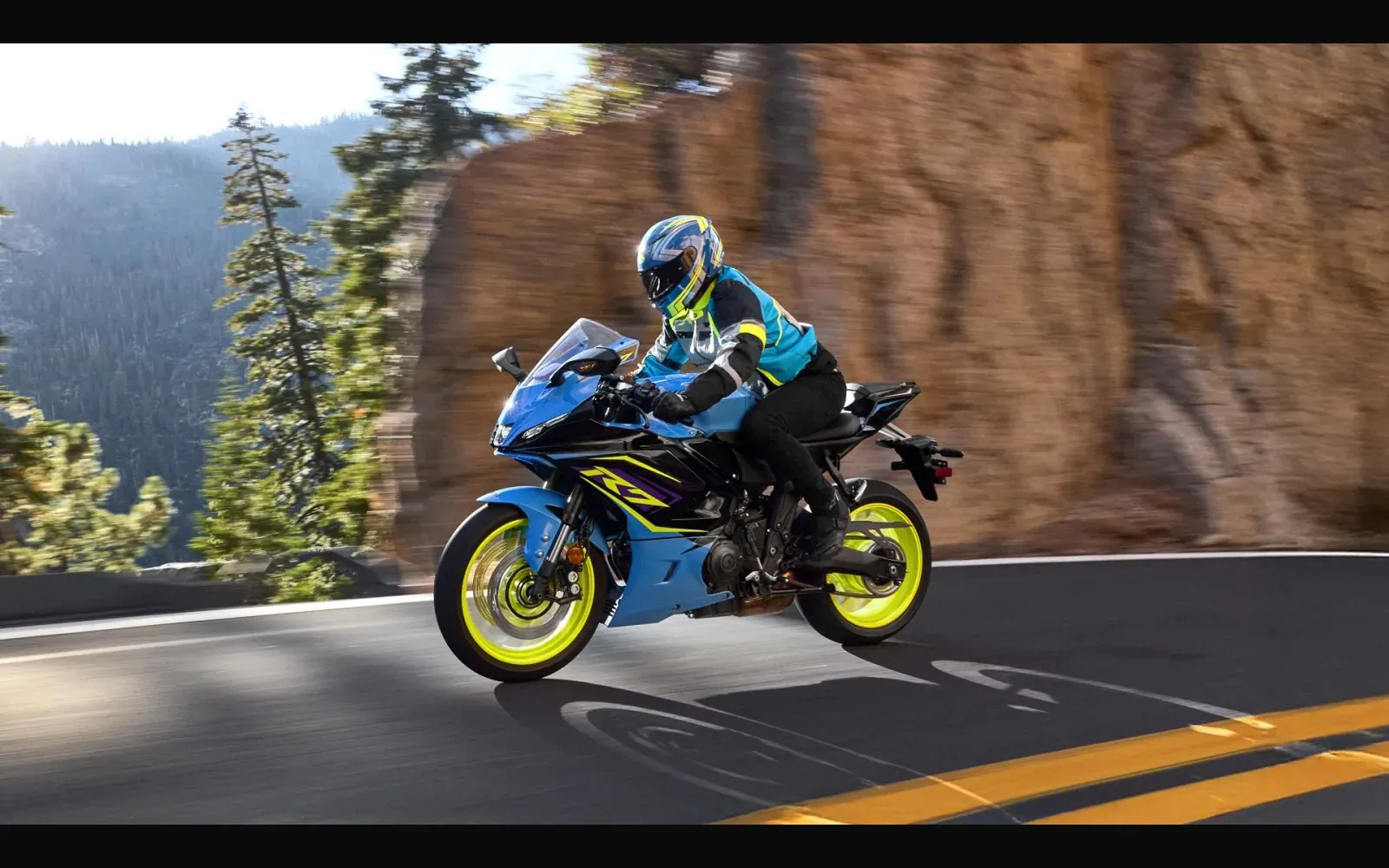
A modern take on the supersport formula: light, focused, and built around a torquey twin that's a riot on real roads.
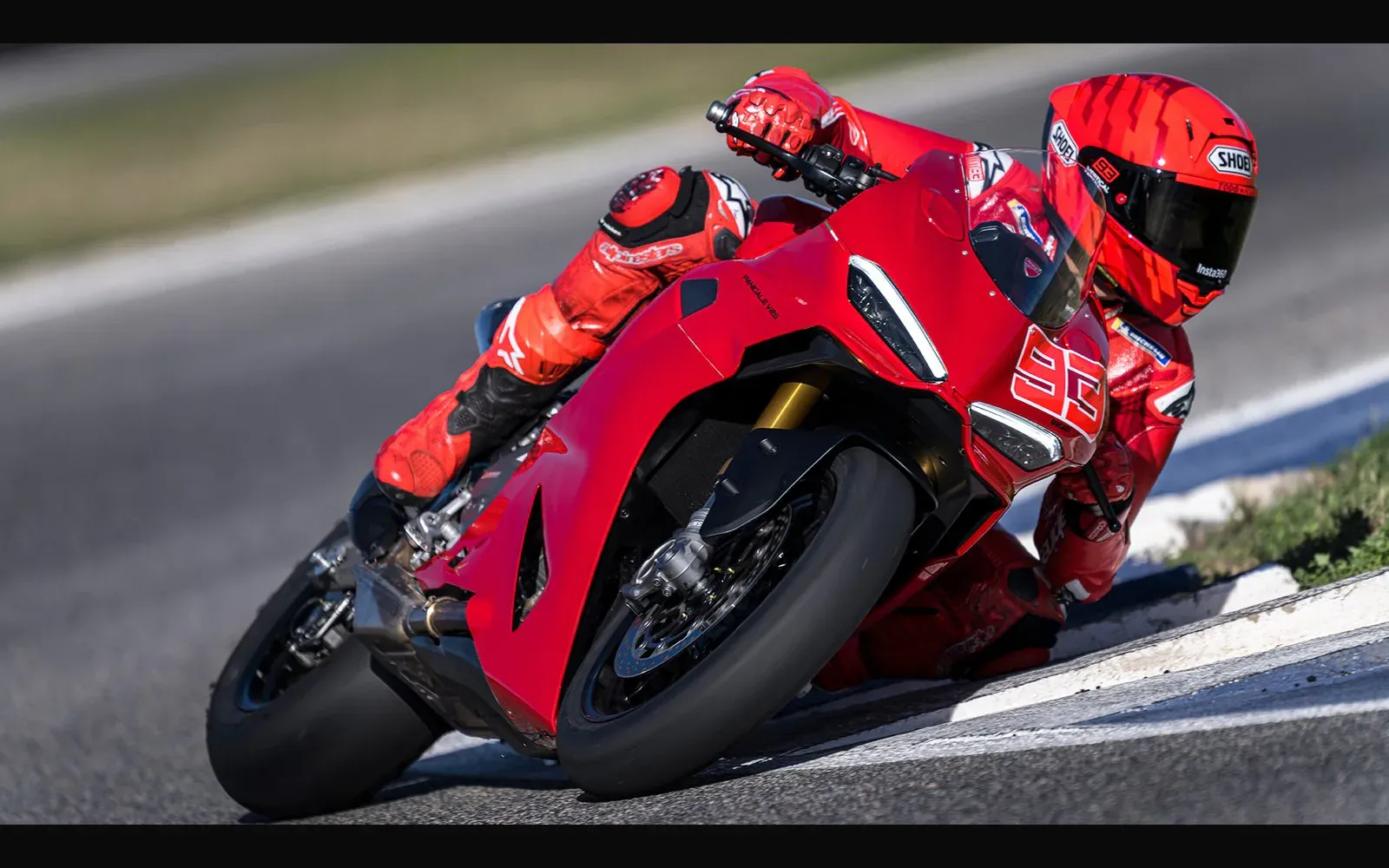
Trades intimidation for usability without losing the drama. Gorgeous, fast, and finally friendly enough for road riders.
Read our Panigale reviewThere is a specific kind of clarity that arrives the moment a good sportbike tips into a corner. The world narrows. Your inputs shrink to millimetres of lean and grams of throttle, the front tyre telegraphs the road through the bars like a live wire, and the bike rotates around you with a precision that feels almost telepathic. That sensation, the addictive, surgical feeling of a chassis doing exactly what you ask, is what the whole genre has chased for decades. The remarkable thing about 2026 is that you no longer need 200 horsepower and a racing licence to find it. The best sportbikes on sale today are sharper than ever, but they are also smarter, lighter on their feet, and far more honest about how most of us actually ride. A six-axis IMU now quietly catches the mistakes that used to end weekends, and the most rewarding bikes in the class are not the angriest ones. They are the ones that let you use everything they have.
This guide is built around that idea. We have ranked three machines that, between them, cover almost everyone: the all-round middleweight that does it all, the stripped-back supersport that rewards skill over outright speed, and the most road-usable superbike Ducati has ever built. The ranked cards above give you the quick verdict. Below, we get into how each one actually rides, the numbers worth knowing, and, just as importantly, who should walk past it.
If you could only own one sportbike, this is the one we would point you toward. The RS 660 is the bike that finally made "do-it-all sportbike" stop sounding like a contradiction. At its heart sits a 659cc parallel-twin with a 270-degree crank, effectively the front cylinder bank of Aprilia's RSV4 superbike V4 reimagined as a twin, and it carries that pedigree in its character. It makes roughly 100 hp at 10,500 rpm and 67 Nm at 8,500 rpm, numbers that look modest on paper until you remember the whole motorcycle weighs about 183 kg wet. The result is a power-to-weight ratio that feels electric in the real world without ever tipping into the kind of violence that makes you tense up.
On the road it is genuinely brilliant. The 270-degree crank gives the twin a syncopated, V-twin-like throb and a fat spread of midrange, so you spend your time surfing torque between third and fifth gear rather than chasing a screaming top end. The ergonomics are the quiet masterstroke: clip-ons set above the triple clamp, a roomy tank, and a seat that lets you string together a 200-mile day without your wrists filing a complaint. It is close to sport-touring comfortable, yet it still carves a mountain road with the immediacy of something far more focused.
It is also a properly modern motorcycle electronically. The full APRC suite runs off an IMU, so you get cornering ABS, lean-sensitive traction and wheelie control, multiple ride modes, and a bi-directional quickshifter. That safety net matters: it lets a newer rider explore the bike's limits with a margin for error, and it lets an experienced one ride hard in the wet without playing Russian roulette with the rear tyre.
Fast enough to thrill, light enough to flick, comfortable enough to ride for hours, the RS 660 is the rare sportbike with no glaring weakness.
Where the Aprilia is the clever all-rounder, the R7 is the purist's answer, and it makes its point by leaving things out. Yamaha built it around the beloved 689cc CP2 parallel-twin, another 270-degree design, tuned here for roughly 72 hp at 8,750 rpm and 67 Nm at 6,500 rpm. Those are not headline-grabbing figures, and that is entirely the point. The R7 is not a bike about peak power. It is a bike about handling, torque, and the discipline of carrying corner speed.
The chassis is the star. A 41mm KYB inverted fork, a taut frame, and a wet weight of about 188 kg give the R7 a tossable, confidence-building feel that flatters a developing rider and never bores an experienced one. The assist-and-slipper clutch keeps the rear settled under hard downshifts, and the torque-rich twin means you can be lazy with the gearbox and still drive cleanly out of slow corners. On a tight, technical road or a club-level track day, the R7 punches well above its spec sheet because momentum, not horsepower, is the currency it trades in.
The honesty cuts both ways. The ergonomics are aggressive, low clip-ons, a committed forward lean, so it asks more of your wrists and core than the RS 660 on a long slog. And crucially, there is no IMU and no lean-sensitive electronics here. You get ABS and the slipper clutch, and that is your lot. For the riders this bike is aimed at, that simplicity is a feature: it teaches throttle control and trust rather than outsourcing them. But it does mean less of a safety net when the road turns greasy.
Superbikes have spent years getting faster than the roads they're sold for. The new-generation Panigale V2 is Ducati quietly admitting as much, and building something better for it. Gone is the old 155 hp, 955cc Superquadro. In its place is an all-new 890cc 90-degree V2 making about 120 hp at 10,750 rpm and 93 Nm at 8,250 rpm, wrapped in the lightest V2 chassis Ducati has ever produced at roughly 176 kg wet.
Read those numbers carefully, because they tell a story of maturity rather than retreat. Ducati traded peak power for usability, midrange, and lightness, and on real roads it is the right trade every time. The new V2 is flexible and tractable where the old Superquadro was peaky and demanding, and shedding kilos transforms how the bike changes direction. It still sounds and looks like a Panigale, all sculpted fairings and exhaust bark, but it has stopped fighting you. This is the first Panigale you could realistically commute on and still want to ride to a track day on Saturday.
The electronics match the ambition: a six-axis IMU underpins cornering ABS, Ducati Traction Control, a quickshifter, and the full menu of ride modes. On track those systems let you lean on the bike's considerable grip with a clear conscience; on the road they are the difference between a moment and an incident. It is still a premium, focused machine, the seat is firm, the commitment real, and the price reflects the badge at ~$15,995, but it has become the most road-usable Panigale in the model's history without losing the drama that makes a Ducati a Ducati.
Here is the honest answer most buyer's guides dodge: as a complete beginner, probably not, and definitely not a 200-horsepower superbike. The aggressive riding position loads your wrists in traffic, the power delivery rewards precision you have not built yet, and the running costs bite. Insurance on a full superbike for a young or newly licensed rider can rival the monthly payment, tyres are a consumable measured in thousands of miles rather than tens of thousands, and a single tip-over can fold expensive fairings into four-figure repairs. None of that is a reason to never own one. It is a reason to be clear-eyed about what you are signing up for.
The exception, and it is a big one, is the modern middleweight twin. A bike like the RS 660 or R7 is a genuinely sane way into the genre. The torquey, forgiving power means you are not constantly managing a hair-trigger throttle, the lighter weight makes low-speed manoeuvres and that inevitable first parking-lot wobble far less intimidating, and (in the Aprilia's case) the IMU electronics quietly catch the mistakes that experience has not yet ironed out. If you are set on starting in this world, start here, not on a litre bike.
When you are choosing, weigh four things honestly:
For the overwhelming majority of road riders, a sharp middleweight twin is not a compromise, it is the sweet spot. The RS 660 gets our overall nod because it asks for nothing and gives everything. The R7 is the bargain that teaches you to ride properly. And the Panigale V2 is proof that even the superbike establishment has learned the secret: the best sportbike isn't the one with the biggest dyno number. It's the one whose every corner you can actually use.