News
Aprilia Reveals the RS-GP26, Its Last 1000cc MotoGP Bike
2 min read
For 2026 Yamaha has retired the inline-four YZR-M1 it raced since 2002 and switched to a V4 producing over 275 hp, the biggest technical gamble in its MotoGP history.
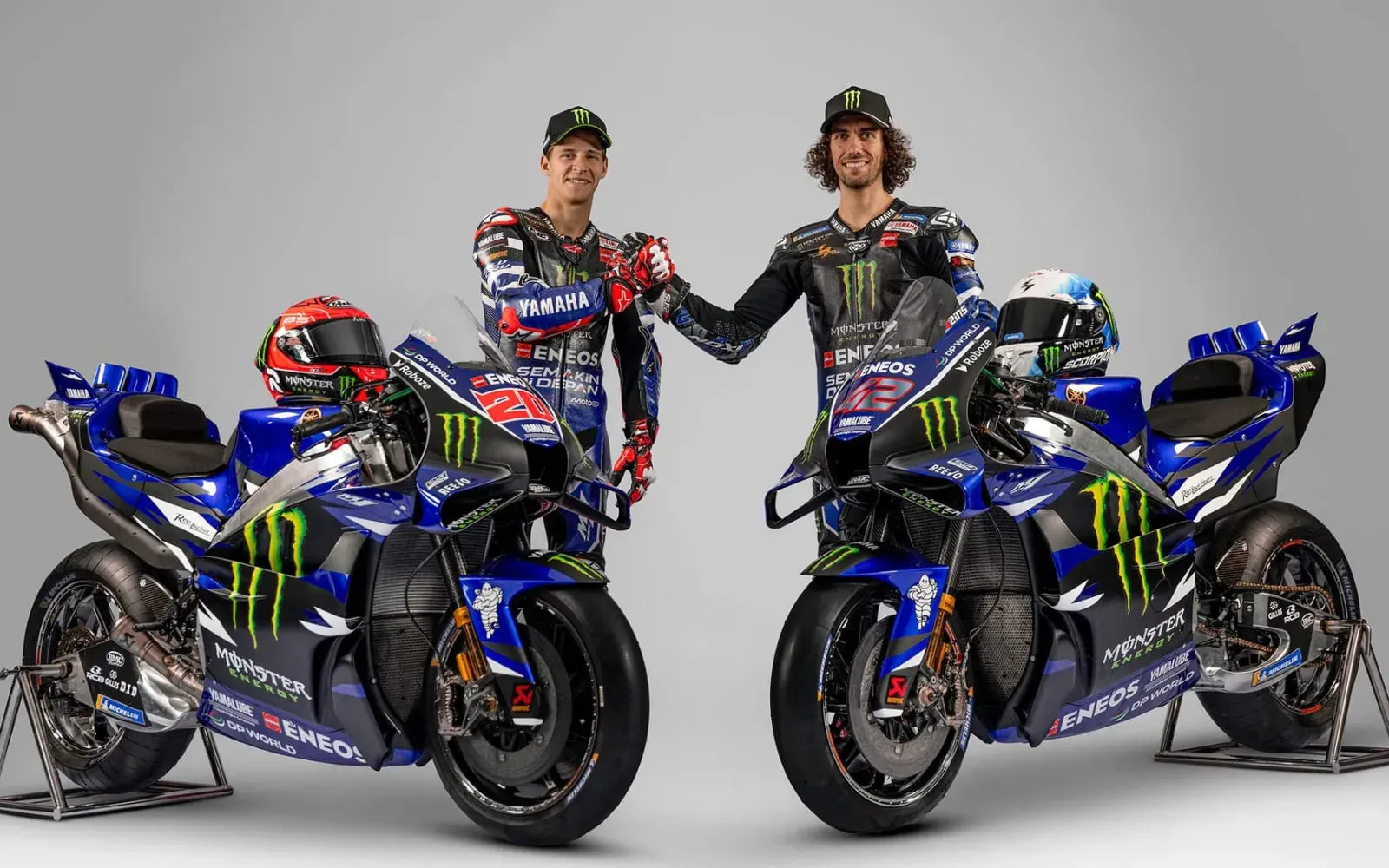
The 2026 MotoGP season marks the end of an era and the start of another for Yamaha. After racing an inline-four YZR-M1 continuously since 2002, the factory has switched to a V4 engine, the most significant technical change in its modern grand prix history. The Monster Energy Yamaha team has already revealed its new V4-era livery, and the bike is now on the grid in anger. It is a gamble born of necessity, and the whole paddock is watching to see if it pays off.
For more than two decades the inline-four M1 was Yamaha's signature. It delivered the smooth power delivery and sweet corner speed that defined champions like Valentino Rossi, Jorge Lorenzo and Fabio Quartararo. But as MotoGP evolved around aggressive aerodynamics, ride-height devices and ever-grippier tyres, the layout's weaknesses became impossible to ignore: a deficit in outright top speed and acceleration against the V4s from Ducati, KTM, Aprilia and Honda.
Yamaha spent recent seasons fighting that horsepower gap on the straights. The engineering conclusion was blunt. To compete at the front again, the architecture itself had to change.
The inline-four made Yamaha world champions. By 2026 it had also become the bike's biggest limitation. Switching to a V4 is Yamaha admitting the formula it perfected had run out of road.
The new YZR-M1 V4 is a 1,000cc, liquid-cooled four-cylinder V engine producing over 275 hp. Beyond the raw figure, the configuration is expected to deliver improved acceleration, better stability under braking, and crucially, greater adaptability to the latest tyre and aerodynamic demands, the exact areas where the inline-four had fallen behind.
A V4 also packages differently, changing how mass is distributed and how the bike can be paired with modern aero, both significant levers in current MotoGP performance.
Yamaha did not rush this. The V4 prototype made its racing debut at the 2025 San Marino Grand Prix in the hands of factory test rider Augusto Fernandez. After a promising weekend it appeared twice more, at Sepang and Valencia, before both factory and Prima Pramac Yamaha riders sampled it at the post-season Valencia test. By the time 2026 began, the V4 had real track mileage behind it.
That careful rollout matters. Yamaha is betting its competitive future on this engine, and it has clearly tried to de-risk the switch as far as a project this fundamental allows.
Yamaha's move means the entire MotoGP grid has now converged on V4 power. The inline-four, once a genuine point of difference, has disappeared from the premier class. It is a reminder of how aero and electronics have reshaped what wins races, narrowing the technical diversity that used to define the sport.
It also raises the stakes for 2027, when MotoGP shifts to new 850cc engine regulations and Pirelli tyres. Yamaha is making its V4 leap in the final year of the current 1,000cc rules, giving it a single season to prove the concept before everything changes again. Get it right, and Yamaha re-enters the title fight on equal architecture. Get it wrong, and it has spent its development capital at the worst possible moment.
For now, the headline is simple: the inline-four M1 is history, and Yamaha's V4 era has begun.