News
2026 Ducati Hypermotard V2: The Wheelie Machine Grows Up
6 min read
Suzuki takes its excellent 776cc parallel-twin platform and reskins it in classic roadster clothing. Meet the 2026 GSX-8T and its cafe-styled sibling, the GSX-8TT.
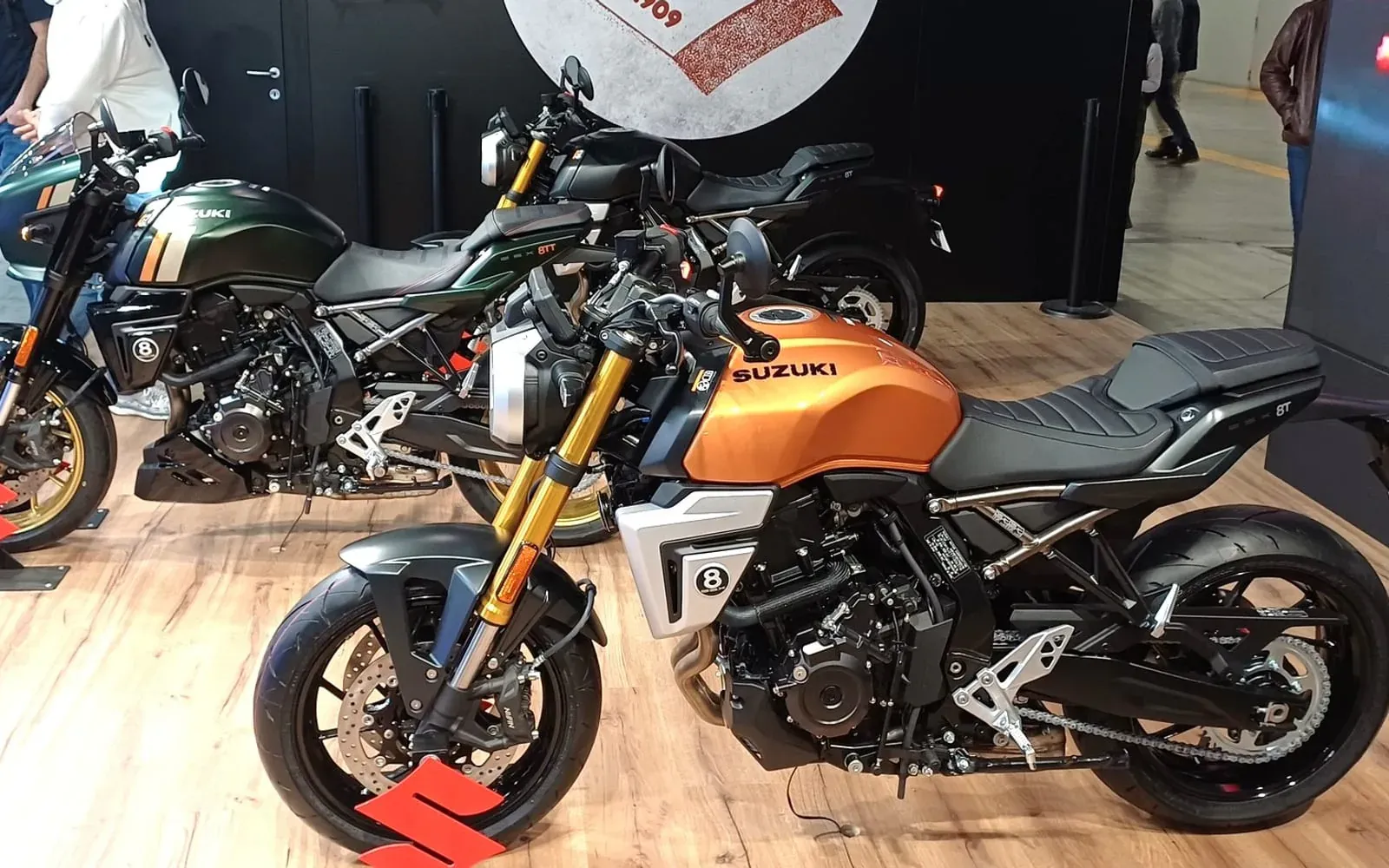
There is a moment, somewhere around the third or fourth new model built on the same engine, when a manufacturer stops iterating and starts having fun. Suzuki has reached that moment with its 776cc parallel twin. First came the GSX-8S naked and the GSX-8R sportbike, both of them quietly excellent, both a little anonymous. Now Suzuki has taken exactly the same mechanical package, thrown a heritage costume over it, and produced two of the most characterful bikes in its current range: the 2026 GSX-8T and the cafe-styled GSX-8TT.
The pitch is a phrase Suzuki keeps repeating, "Retro Spirit, Next Generation Performance," and for once the marketing line actually describes the product. These are not soft, detuned nostalgia machines. Underneath the round headlight and the teardrop tank sits the same modern, torque-rich twin and the same genuinely useful electronics that make the GSX-8S such a strong all-rounder. The retro look is a wrapper, not a compromise.
To understand why these bikes are worth your attention, you have to appreciate the engine they are built around. Suzuki's 776cc parallel twin uses a 270-degree firing order, which gives it the uneven, V-twin-like pulse that riders love, and it pairs that with Suzuki's clever Cross Balancer system, a second balance shaft mounted crossways that cancels vibration without dulling the character. The result is one of the sweetest middleweight twins on the market: it makes around 83 hp and a meaty 78 Nm of torque, and it delivers that grunt low and early, exactly where you use it on the road.
The GSX-8S proved the platform. It punched well above its price, felt premium, and handled with real precision. Its only weakness was personality: it looked like every other angular modern naked. The GSX-8T and 8TT fix precisely that, and nothing else, which is the smart way to do it.
Both new bikes swap the 8S's aggressive origami for classic roadster lines. There is a round headlight, a rounded fuel tank, a flatter bench seat and a cleaner, more timeless silhouette. It is a look that reaches back to the air-cooled Suzukis of the 1970s and 1980s without descending into pastiche.
The difference between the two models is deliberately small. Suzuki has been open that the GSX-8T and GSX-8TT are, in its own framing, close to identical machines. The 8TT adds a small headlight cowl and an under-cowl that give it a cafe-racer squint, along with a subtly lower, specially trimmed seat. It also gets the showpiece paint: a Pearl Matte Shadow Green or a Glass Sparkle Black, each with striping matched to the wheel colour and raised 3D 8TT badges. The 8T is the cleaner, more upright standard roadster; the 8TT is its slightly racier, more dressed-up sibling. Choose by taste, not by spec sheet.
Because these bikes share the 8-series backbone, they arrive with kit that shames a lot of retro rivals. A bi-directional quickshifter lets you bang up and down the box without the clutch, Suzuki's traction control and ride modes are present and correct, and there is a full-colour dash. This is where the "next generation performance" half of the slogan earns its keep: plenty of neo-retro machines look the part but ride on budget hardware, whereas the Suzukis bring modern electronics to a classic shape.
Suzuki has also fitted a new lithium-ion battery it says is safer, more temperature-tolerant and longer-lived than a conventional unit, with a claimed decade of service life. It is a small thing, but it speaks to the philosophy: modernise the ownership experience, keep the look timeless.
The neo-retro roadster class is suddenly crowded, and that is good news for buyers. Kawasaki's Z900RS remains the emotional benchmark, with its gorgeous Z1 tribute styling and a smooth inline-four, though it costs more. Honda's new CB1000F brings litre-class muscle and heritage looks. Yamaha's XSR900 is the sharp, sporty option, and Triumph's Bonneville family owns the premium British-twin niche.
The Suzukis slot in as the value-led, everyday-usable choice. They undercut the four-cylinder retros, carry an engine with more genuine character than most, and back it with electronics the others often charge extra for. At an MSRP of $10,649 for the GSX-8T and $11,149 for the GSX-8TT, they are priced to tempt riders who want the modern-classic look without the modern-classic premium.
Both bikes are reaching dealers now, with the GSX-8T at $10,649 and the more style-focused GSX-8TT at $11,149 in the US market. European pricing and final availability will vary by market, but expect the pair to sit just above the standard GSX-8S, a small premium for a very different character.
If you have read our coverage of the wider retro revival, none of this will surprise you: the industry has worked out that the same riders who grew up on angular sportbikes now want something with soul in the garage. The clever part of Suzuki's move is that it did not have to build a new engine to answer that demand. It already had one of the best middleweight twins on sale. It just needed to give it a face worth falling for. A full road test will follow once we have ridden them back to back.
| Spec | Detail |
|---|---|
| Engine | 776cc liquid-cooled parallel twin, 270-degree crank, Cross Balancer |
| Power | ~83 hp |
| Torque | ~78 Nm |
| Electronics | Ride modes, traction control, bi-directional quickshifter |
| Seat height | ~810 mm |
| Kerb weight | ~202 kg |
| Battery | Long-life lithium-ion (claimed ~10-year service life) |
| GSX-8T price | $10,649 (US MSRP) |
| GSX-8TT price | $11,149 (US MSRP) |
| 8TT extras | Headlight cowl, under-cowl, lower special seat, premium paint |