News
2026 Ducati Hypermotard V2: The Wheelie Machine Grows Up
6 min read
BMW has rebuilt its naked boxer from the ground up. The 2026 R 1300 R brings 145 hp, a lighter chassis, and the first Dynamic Suspension Adjustment on a production bike. This is the sharpest R yet.
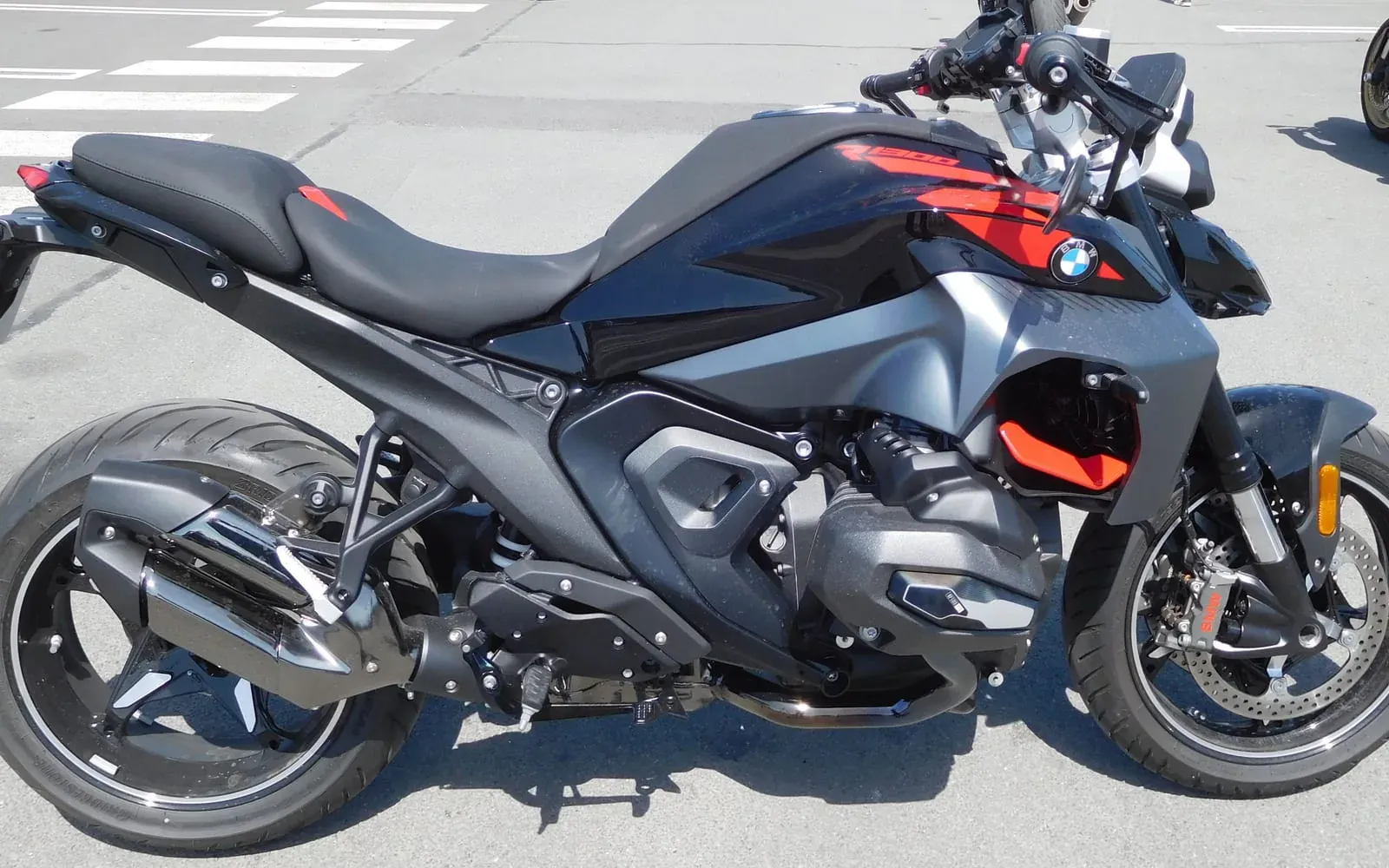
For years the roadster in BMW's boxer range was the sensible sibling. The R 1250 R did everything competently and asked for nothing, a naked bike you respected more than you craved. So the interesting question about the new R 1300 R was never whether BMW could make it faster. It was whether BMW would finally give the plainest member of the family some genuine attitude. Having now seen it in the metal, the answer is yes, and it changes how you think about the whole boxer roadster idea.
This is not a reskin. The R 1300 R is built on the same all-new architecture that reinvented the R 1300 GS, which means a fresh engine, a new frame, and a chassis that has been rethought rather than revised. It is the last of the big boxers to make the jump to the 1300 platform, and BMW has used the extra development time to aim it squarely at the premium naked class rather than leaving it as the quiet all-rounder it used to be.
The 1,300cc air and liquid-cooled flat-twin is the star, as it always is on a boxer. Peak output is 145 hp at 7,750 rpm, with 149 Nm of torque arriving at 6,500 rpm. Those are meaningful gains over the old 1250, but the numbers only tell half the story. The character is the point. A boxer twin makes its case low and in the middle, and this one pulls with a fat, immediate shove from just off idle, the kind of drive that makes a roadster feel effortless on a back road rather than frantic.
BMW's ShiftCam variable valve timing is still doing the clever work behind the scenes, giving the engine a docile, economical bottom end that hardens into real urgency once you open it up. It is a genuinely fast naked bike now, quick enough to trouble the established super-nakeds in the real world, where midrange matters more than a headline peak.
The R used to be the boxer you bought with your head. The 1300 is the first one you might buy with your heart.
Underneath, the R 1300 R gets a new sheet-metal main frame paired with a die-cast aluminium rear subframe, a combination BMW says is both lighter and stiffer than before. The front end runs a 47 mm inverted fork with 140 mm of travel, and the rear keeps the boxer's signature EVO Paralever, now in a revised second-generation form with 130 mm of travel.
The headline feature is Dynamic Suspension Adjustment (DSA), which BMW claims is a production-motorcycle first. Where older semi-active systems only varied damping, DSA also adjusts the spring rate on the move, adapting both how firmly the bike is sprung and how it is damped to the road and your riding. On paper it promises the holy grail of a plush ride that firms up exactly when you start pushing. It is the sort of technology that used to define the flagship tourers and is now trickling down to the naked bikes.
Curb weight comes in at around 239 kg, which is competitive for a fully-equipped boxer with a big tank and a full electronics suite, if not featherweight by super-naked standards.
BMW has not been shy with the rider aids. The R 1300 R arrives with Rain, Road and ECO riding modes as standard, with Dynamic and Dynamic Pro modes available to unlock its sharper side. There is MSR engine drag torque control to stop the rear stepping out on aggressive downshifts, BMW Motorrad Integral ABS Pro that stays composed when you brake mid-corner, and full LED lighting throughout. A colour TFT display handles the interface, with connectivity and navigation prompts built in.
None of this is unusual for BMW at this level, but it means the roadster no longer feels like the budget entry to the boxer world. It is specified like a flagship.
The premium naked segment is crowded and brilliant, from the Ducati Streetfighter to KTM's Super Duke and Aprilia's Tuono. What the R 1300 R offers that none of them can is boxer character: that distinctive sideways twin thrum, the low centre of gravity, the way the engine leans the whole bike into your hand at a standstill. It was always the differentiator. The difference now is that BMW has backed the character with performance and a chassis worthy of the class, rather than asking you to accept a softer bike for the sake of the badge.
For riders in the Netherlands and across Europe, it also slots neatly into the sweet spot of usable, all-year real-world motorcycling: upright, torquey, weatherproof with the right accessories, and happy on a commute or a long Sunday through the Ardennes.
| Spec | Detail |
|---|---|
| Engine | 1,300cc air/liquid-cooled flat-twin boxer, ShiftCam |
| Power | 145 hp @ 7,750 rpm |
| Torque | 149 Nm @ 6,500 rpm |
| Front suspension | 47mm inverted fork, 140mm travel, optional DSA |
| Rear suspension | EVO Paralever II, 130mm travel |
| Electronics | Riding modes, MSR, Integral ABS Pro, TFT |
| Weight | ~239 kg (curb) |
| Price | from $16,595 (US) |
BMW lists the R 1300 R from $16,595 in the US, with European pricing landing in the same premium-naked bracket once options are added, and bikes reaching showrooms from late 2025 into 2026. As ever with BMW, the base price is the start of a conversation: the options list is long, and a well-specified R 1300 R with DSA and the dynamic package will cost meaningfully more.
We will hold our final verdict for a full road test, where the DSA system and that reworked boxer can be judged on real roads rather than a spec sheet. But on first acquaintance, the plainest boxer has quietly become one of the most interesting. The sensible sibling grew up, hit the gym, and turned up to the party.