News
2027 KTM 790 Duke Revealed: Sharper, Lighter, Better Equipped
4 min read
With the 675SR-R sportbike and 675NK naked, CFMoto has aimed a home-grown inline-triple squarely at the Triumph Trident and Daytona 660. On paper, and at the price, it lands hard.
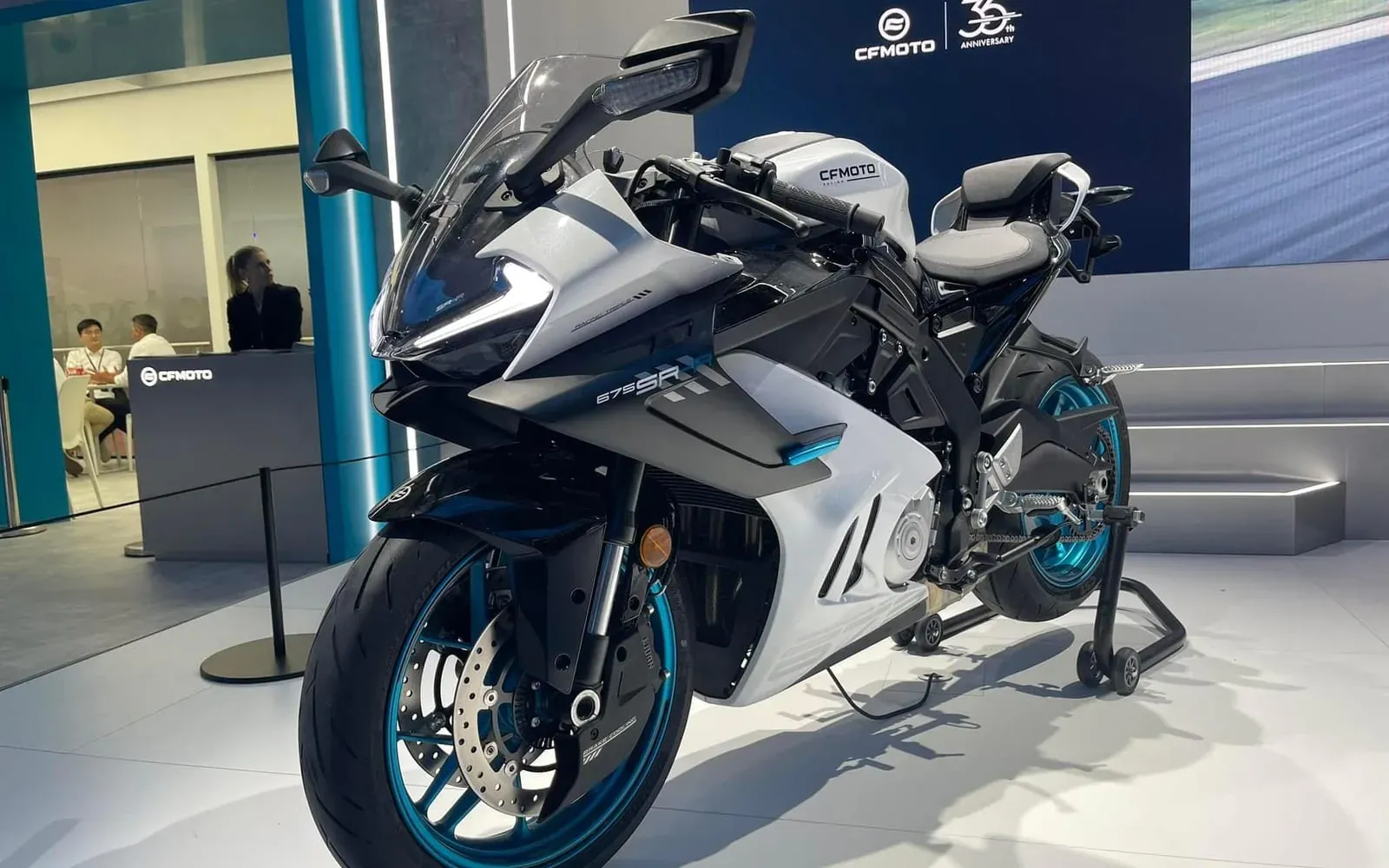
For twenty years, if you wanted the particular magic of a middleweight inline-triple, the sweet spot between a lumpy twin and a screaming four, you went to Triumph. The 675 Daytona and Street Triple defined that engine format and, frankly, owned it. So there is something genuinely startling about the fact that the most talked-about new triple of 2026 does not wear a Triumph badge. It wears a CFMoto one, and it costs less than eight thousand of anything.
CFMoto, the Chinese manufacturer that most Western riders first met as the company building KTM's smaller engines under licence, has spent the last few years quietly climbing the capacity ladder. Now it has arrived in the class that matters most for credibility. The 675SR-R faired sportbike (sold as the 675SS in the United States) and the 675NK naked share a brand-new, entirely in-house 675cc inline-triple. This is not a rebadged KTM twin or a bought-in engine. It is CFMoto's own three-cylinder, and it changes the conversation about what the brand is.
To understand the ambition here, you have to understand the engine choice. Building a good inline-triple is hard. It is the format that gives you the low-end tractability of a twin and the top-end urgency of a four, but getting the balance shaft, the crank, and the fuelling right is exactly where cheaper manufacturers usually give up and fit a parallel-twin instead. CFMoto did not give up.
The result is a 675cc unit that, in the sportier 675SR-R, makes a claimed 94 hp at 11,000 rpm and 70 Nm of torque at 8,250 rpm. The 675NK naked is tuned almost identically, at roughly 95 hp. Those are real middleweight numbers: more power than Triumph's road-focused Daytona 660 and Trident 660, from an engine that revs harder and sounds, by every early account, genuinely triple. The bore and stroke of 72 x 55.2mm is shared with CFMoto's excellent 450 twins, so this is a coherent family of engines rather than a one-off.
Crucially, the whole package is light. CFMoto quotes a kerb weight of around 189 kg for the 675SR-R, which is competitive with the Japanese and British establishment rather than the heavy also-ran you might expect from a value brand.
Here is where it stops being a curiosity and starts being a threat. The 675SR-R does not just undercut its rivals, it undercuts them while carrying kit they charge extra for.
The price is the headline that makes the rest land. In Europe the 675SR-R launched at around €7,999; in the US the faired 675SS is $7,999 and the 675NK naked $7,499. For context, that puts a fully adjustable, quickshifter-equipped triple below the price of some single-cylinder learner bikes and well under a Triumph Daytona 660. The value proposition is not subtle.
The obvious comparison is Triumph, and it is worth being precise about it. Triumph's Daytona 660 and Trident 660 are deliberately road-first triples: torquey, friendly, beautifully finished, and backed by decades of dealer trust and known reliability. The Daytona makes around 94 hp from its 660cc triple and rides with a polish CFMoto still has to prove it can match over 30,000 miles.
That word, prove, is the honest catch. CFMoto's engine is new. Its long-term reliability, its dealer network in some markets, and its residual values are all unproven in a way Triumph's simply are not. Early reviews (MCN, Bennetts and 1000PS among them) have been strikingly positive about the way the 675SR-R goes down a road, praising the eager engine and genuinely sorted chassis, while noting the usual first-generation rough edges: fuelling that can be abrupt, and finish details that reveal where the money was saved. This is a fast, well-sorted motorcycle. Whether it is a durable one is a question only time answers.
Against the Yamaha R7 and Aprilia RS 660, the CFMoto splits the difference cleverly: more cylinders and more revs than the Yamaha twin, far less money than the premium Aprilia. It is the value play in a class that had stopped having one.
| Spec | 675SR-R |
|---|---|
| Engine | 675cc liquid-cooled inline-triple, DOHC |
| Power | ~94 hp @ 11,000 rpm |
| Torque | ~70 Nm @ 8,250 rpm |
| Weight | ~189 kg (kerb) |
| Seat height | 810mm (accessory 795mm / 830mm) |
| Fuel capacity | 15 litres |
| Front suspension | 41mm KYB USD fork, fully adjustable |
| Rear suspension | KYB monoshock, adjustable |
| Front brakes | Dual 300mm discs, J.Juan radial 4-piston, ABS |
| Electronics | Ride-by-wire, ride modes, traction control, quickshifter |
| Price | ~€7,999 / $7,999 (675SS) |
Both bikes are on sale now through CFMoto's expanding European and North American networks, with A2-restricted versions offered where the licence category demands it, which makes the SR-R a rare thing: a genuine supersport a newer rider can grow into legally. We have added the 675SR-R to our motorcycle leaderboard on the strength of those early reviews, with the usual caveat that its score is provisional until the long-term picture fills in.
The bigger story is not one bike. It is that the middleweight class, comfortable and predictable for years, suddenly has a newcomer offering more equipment for less money than anyone thought possible. Even if you would never buy one, that is good news for every rider, because it forces everyone else to sharpen their pencils. We will have a full road test the moment we can get an SR-R on home roads.