News
The Royal Enfield Bear 650 Is the Scrambler That Doesn't Overpromise
5 min read
Royal Enfield's first electric motorcycle, the Flying Flea C6, revives a wartime name with a girder fork, a 124 kg kerb weight, and genuinely clever tech. Here is why it matters.
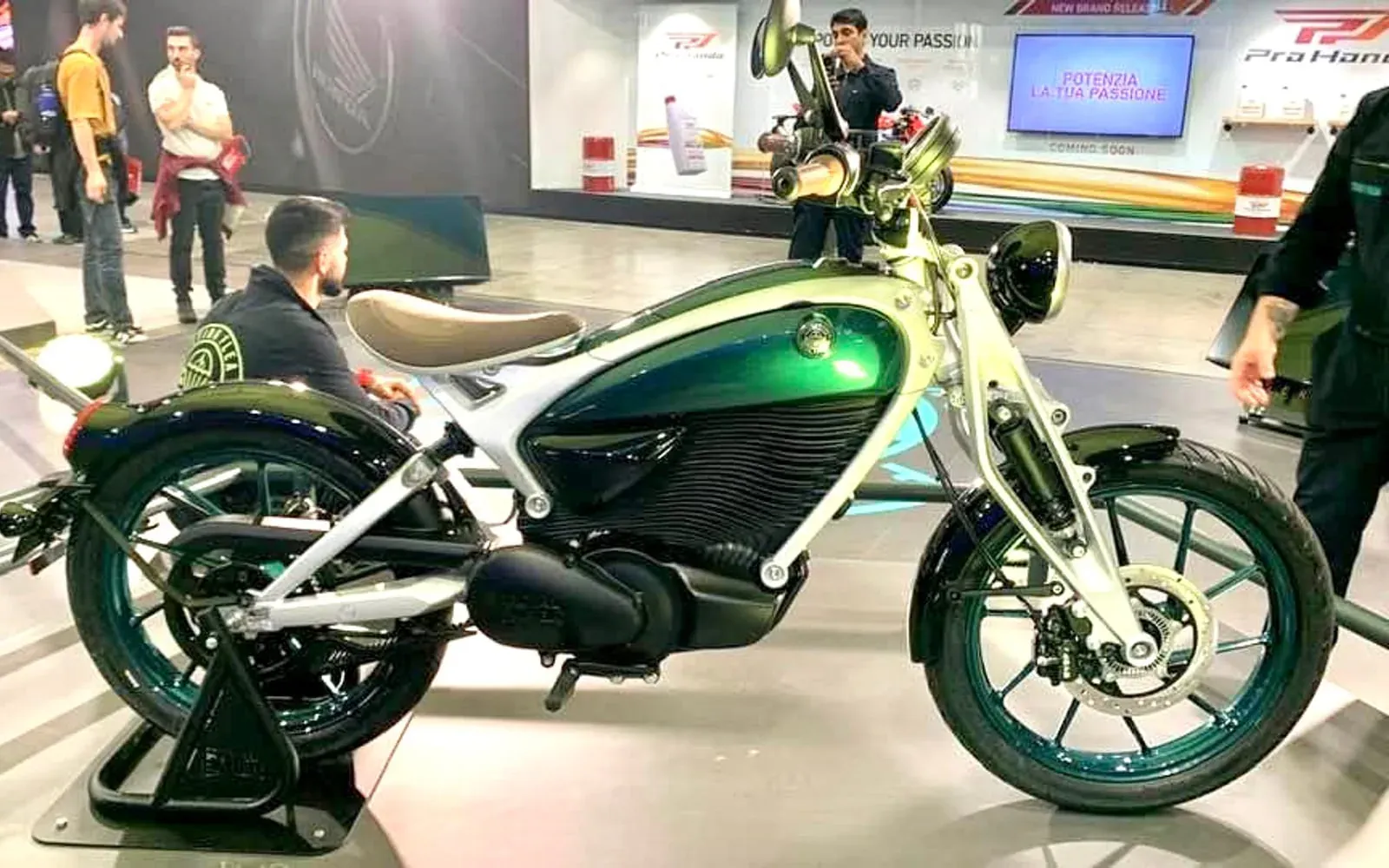
The name comes from a parachute. In the Second World War, Royal Enfield built a tiny 125cc two-stroke light enough to be strapped into a cradle and dropped from an aircraft alongside airborne troops, a machine the soldiers nicknamed the Flying Flea. Eighty years later, the oldest motorcycle brand in continuous production has dug that name back out of its history books and bolted it onto something the founders could never have imagined: a battery. The Flying Flea C6 is Royal Enfield's first electric motorcycle, and it has finally started reaching customers.
For a company whose entire identity is built on air-cooled thumpers and a deliberately unhurried way of doing things, this is a genuine leap. Royal Enfield has spent the last decade selling nostalgia at scale, becoming the most successful middleweight brand in the world by making simple, honest, affordable machines. An electric bike is the opposite of everything that formula stands for. So the interesting question is not whether Royal Enfield could build an EV, but whether it could build one that still feels like a Royal Enfield.
Royal Enfield does not chase technology for its own sake. It sells more motorcycles than Harley-Davidson and Triumph combined, almost entirely on the strength of the 350cc and 650cc air-cooled twins that made its name. When a company that conservative commits to electric power, it is a signal about where the whole industry is heading, not a science project.
The Flying Flea is set up as its own sub-brand rather than a badge on an existing model, which tells you Royal Enfield sees this as the start of a family, not a one-off. The C6 is the roadster that opens the range, with a scrambler-styled S6 already previewed to follow. If the marque that built its fortune on the internal combustion engine is willing to spin off a separate electric identity, the era of the boutique, character-led EV has properly arrived.
Royal Enfield built its empire on simple air-cooled twins. Betting a whole sub-brand on electric power is the boldest thing the company has done in a generation.
Look past the fact that it is electric and the C6 is unmistakably a Royal Enfield. There is a round headlamp, a low and honest riding position, and a faux fuel tank complete with cooling fins, except the fins now hide a battery rather than a cylinder head. It is a clever piece of visual sleight of hand: the shape your eye expects is there, even though the mechanical reason for it has gone.
The standout detail is the front end. Instead of conventional telescopic forks, the C6 uses a forged aluminium girder fork with a hydraulic damper and a steering linkage, a direct nod to the pre-war design language of the original Flying Flea. Girder forks all but vanished from motorcycling in the 1950s, so seeing one on a brand new machine is startling, and it does real work: it separates braking forces from the suspension action in a way telescopic forks cannot. It is the sort of engineering flourish you simply do not expect at this price.
The heart of the C6 is a permanent-magnet synchronous motor making a peak 15.4 kW, which works out to roughly 21 hp, fed by a 3.9 kWh battery. On paper those are modest figures, and they should be read in the right context. This is a city bike, not a canyon weapon. Royal Enfield quotes a 0 to 60 km/h sprint of 3.7 seconds and a top speed of 115 km/h, which is exactly the profile you want for commuting: brisk enough to leave traffic behind at the lights, fast enough to hold its own on a ring road.
Range is the number that will decide how many people buy one. Royal Enfield claims 154 km on the optimistic IDC test cycle, which in real-world city riding is likely to translate to somewhere around 100 to 110 km between charges. A full charge from the integrated onboard charger takes a little over two hours. None of that will trouble a touring rider, but for the urban commuter this bike is aimed at, a working week of short trips on a single overnight charge is entirely realistic.
Then there is the weight, and this is where the C6 quietly shines. At a 124 kg kerb weight, it is the lightest motorcycle Royal Enfield has ever built, lighter than most 125s and dramatically lighter than the heavyweight electric nakeds that dominate the segment. Low weight flatters everything: it makes the bike easier to paddle around a car park, more playful in traffic, and far less intimidating for a new or returning rider. In a class where EVs have tended to pile on kilos to chase range, going the other way is a real statement.
For a bike that looks like it belongs in a 1940s newsreel, the C6 is startlingly modern under the surface. Royal Enfield has built it around a Qualcomm Snapdragon processor and a custom vehicle control unit, feeding a round TFT touchscreen that carries navigation, connectivity and even voice control. There are four ride modes, Rain, City, Highway and Sport, plus a custom mode that lets you tune throttle response, power delivery, traction control and regenerative braking to taste. Royal Enfield claims the permutations run into the hundreds of thousands, which is marketing arithmetic, but the underlying point is real: this is a deeply configurable machine.
Lean-sensitive ABS rounds out a safety package that would have been flagship-only technology a few years ago. The through-line is that Royal Enfield has not treated its first EV as an econobox. It has treated it as a flagship for a new idea.
Deliveries of the C6 have begun, starting in Royal Enfield's home market of India, where pricing lands around the equivalent of a well-specified 350cc petrol model, with a battery-as-a-service option to bring the entry cost down further. International pricing and timing are still being confirmed market by market, and the exact figures for Europe and North America are the detail worth watching, because they will determine whether the C6 is a curiosity or a genuine mainstream alternative.
What is already clear is the ambition. Royal Enfield has not built a compliance EV or a badge-engineered scooter. It has taken one of the most evocative names in its 125-year history, wrapped it around some genuinely thoughtful engineering, and priced it to sell in volume. Whether the C6 rides as charmingly as it looks is a question for a full road test, and we will bring you one the moment we can throw a leg over it. But as a statement of intent, the Flying Flea could hardly be louder.
| Spec | Detail |
|---|---|
| Motor | Permanent-magnet synchronous, peak 15.4 kW (~21 hp) |
| Torque | ~60 Nm |
| Battery | 3.9 kWh |
| Range | |
| 0-60 km/h | 3.7 seconds |
| Top speed | 115 km/h |
| Kerb weight | 124 kg |
| Front suspension | Forged aluminium girder fork, hydraulic damper |
| Electronics | 4 ride modes + custom, lean-sensitive ABS, round TFT touchscreen, Snapdragon processor |
| Charging | Integrated onboard charger, ~2h 16m full charge |