News
CFMoto Just Built a 675 Triple, and Triumph Should Be Worried
6 min read
Yamaha drops its beloved 890cc CP3 triple into a dedicated supersport chassis with Brembo Stylema brakes and a full six-axis IMU. The YZF-R9 is the middleweight sportbike the R6 always pointed toward, reborn for the real world.
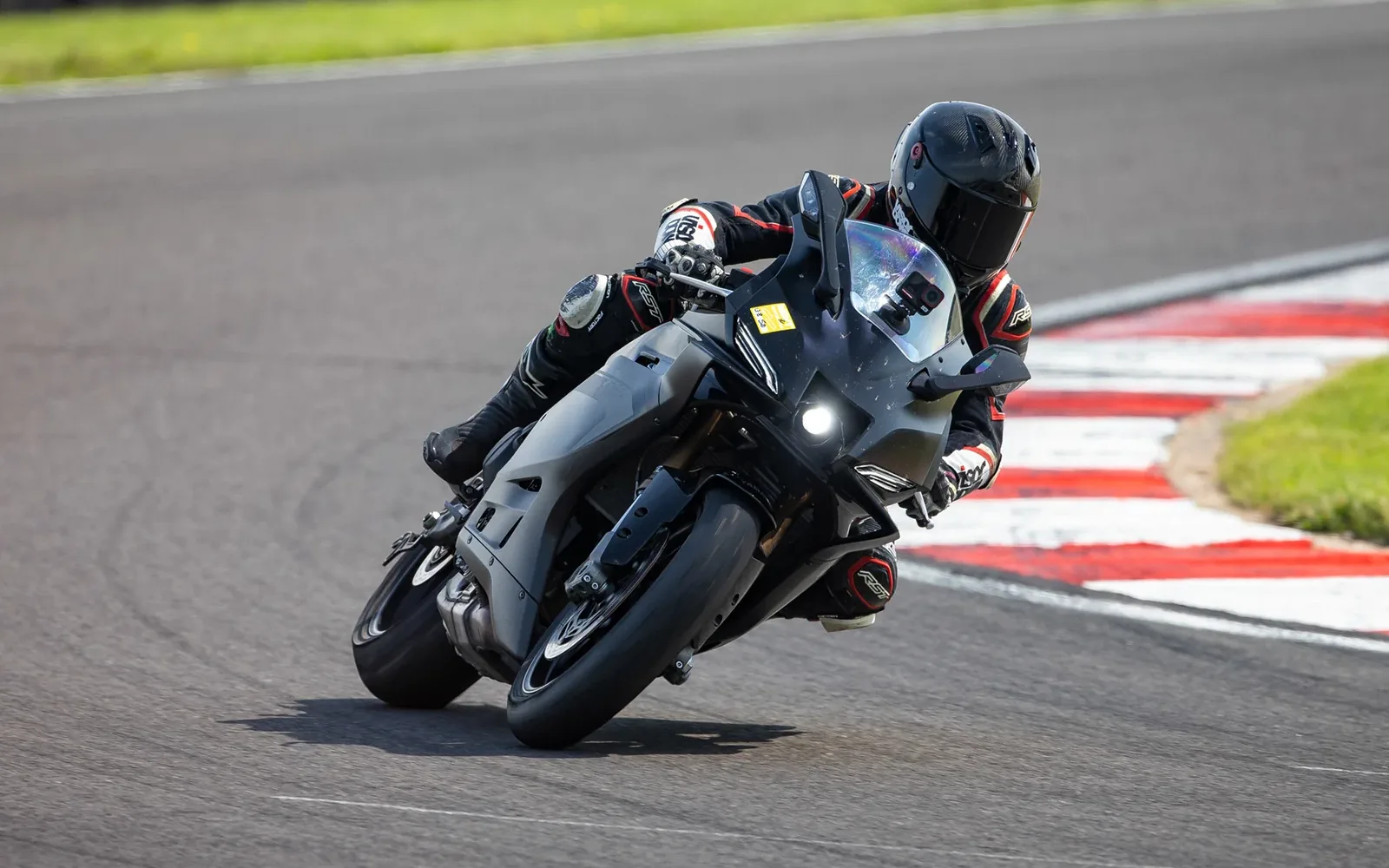
There is a specific sound a CP3 triple makes when you crack the throttle past 6,000 rpm, a hard, off-beat bark that no inline-four and no parallel-twin can fake. For a decade Yamaha kept that engine in nakeds and sport-tourers, in the MT-09 and the Tracer and the XSR, brilliant bikes all, but never once did it hide that motor behind a full fairing and a set of clip-ons and call it a sportbike. The YZF-R9 changes that. It takes the engine everyone already loves, wraps it in a chassis built from scratch for corners, and finally answers the question Yamaha loyalists have been asking since the R6 quietly slipped off the road-legal price lists: what comes next?
The answer, it turns out, is not a screaming 600 reborn. It is something cleverer, and for most riders, something better.
The middleweight supersport class spent years dying a slow death. Emissions rules strangled the high-revving 600cc fours, insurance costs frightened off new riders, and one by one the R6, the GSX-R600 and the CBR600RR retreated to track-only status or vanished from showrooms. What remained was a hole in the range: nothing between the friendly, twin-cylinder R7 and the ferocious, litre-class R1. No middle ground. No modern supersport you could actually ride to work.
The R9 is Yamaha's answer, and the logic is hard to argue with. Rather than chase peaky, expensive four-cylinder power, Yamaha reached for the 890cc CP3 triple it has spent years perfecting. That engine makes its torque low and wide, exactly where a road rider lives, and it does it with a character that a revvy four has never matched. Drop it into a real sportbike and you get performance that flatters instead of intimidates.
This is the part that separates the R9 from a faired MT-09, and it is where Yamaha spent its money. The R9 gets an all-new Deltabox aluminium frame, a fresh subframe and swingarm, and geometry set for a supersport rather than a street naked. The result is a claimed 195 kg wet, a genuinely light middleweight, carried on fully adjustable KYB suspension: a 43mm upside-down fork and a matching rear shock, both open to the clicks and preload changes a track day demands.
Braking is where the ambition shows most plainly. The R9 wears Brembo Stylema radial four-piston calipers on dual 320mm front discs, fed by a radial master cylinder. That is genuine superbike hardware, the same family of stopper you find on machines costing twice as much, and it signals exactly how seriously Yamaha wants this bike taken.
Governing all of it is a six-axis IMU, the sensor package that lets the electronics understand lean angle, pitch and slide. From it flow cornering-aware traction control, slide control, lift control and brake control, plus multiple ride modes and an up-and-down quickshifter as standard. A five-inch TFT display runs the show. It is a deep, modern suite, the kind of safety net that lets a rider explore the bike's limits with a margin underneath.
Then there are the winglets. The R9 borrows MotoGP-derived aerodynamics: a signature M-shaped front duct and small functional wings that Yamaha says trim front-wheel lift by roughly 7 percent in a straight line and closer to 10 percent when cornering. On the road you will rarely feel it. On a fast track, holding the front planted under hard acceleration, it earns its keep. Whether you love or loathe the look is a separate conversation, and it is one owners are already having loudly.
Early testing has been warm. Reviewers keep landing on the same word: usable. The triple's midrange means you do not have to wring its neck to make progress, the ergonomics are aggressive without being punishing, and the chassis is praised as sharp and confidence-inspiring rather than nervous. MCN handed the R9 its Best Sportsbike award, and testers from Sevilla to Donington to Sydney's tracks have come away describing a bike that is quick, friendly and genuinely rewarding at real-world speeds, not just at a professional's pace.
Be honest about the compromises, though. The R9 asks more of your wrists and your back than the upright MT-09 it shares an engine with; this is a committed riding position, and long motorway slogs will remind you of it. The styling, winglets and all, divides opinion. And while the price is fair, it is not the bargain the twin-cylinder R7 represents. This is a step up in intent and in cost.
Against its natural rivals, the R9 looks shrewdly placed. The Aprilia RS 660 remains the sweet-handling benchmark twin, and the new middleweight triples and fours are circling, but the R9 splits the difference with a three-cylinder character all its own and a spec sheet, Stylema brakes, full IMU, adjustable KYB, that reads richer than its price. Against Yamaha's own range it is the obvious next bike for an R7 owner who wants more, and a saner daily companion than an R1 that is now track-focused and EU-restricted.
| Spec | 2026 Yamaha YZF-R9 |
|---|---|
| Engine | 890cc CP3 inline-triple, liquid-cooled |
| Power | 117 hp (87 kW) at 10,000 rpm |
| Torque | 93 Nm at 7,000 rpm |
| Weight | 195 kg (wet) |
| Seat height | 830 mm |
| Fuel capacity | 14 litres |
| Frame | All-new Deltabox aluminium |
| Suspension | Fully adjustable 43mm KYB USD fork, fully adjustable KYB shock |
| Brakes | Dual 320mm front discs, Brembo Stylema radial four-piston |
| Electronics | Six-axis IMU, cornering TC / slide / lift / brake control, ride modes, up/down quickshifter, 5-inch TFT |
| Aero | MotoGP-derived M-duct and front winglets |
| Price | From $12,499 (US) / around 15,499 euros (NL) |
The R9 lands from $12,499 in the United States and around 15,499 euros in the Netherlands, with bikes already reaching dealers. Set that against the electronics and brake hardware on the spec sheet and the value case is strong: this is superbike-grade kit in a middleweight that most riders can actually use every day.
For a decade the CP3 triple was the best engine Yamaha refused to build a sportbike around. The R9 ends that, and it does it without pretending the old 600cc arms race is coming back. It is not a reborn R6. It is something more useful: a modern supersport tuned for the roads people really ride, with a track-day ceiling high enough to keep the ambitious happy. We will bring you a full road test soon. On paper, and on the evidence of the first rides, Yamaha has judged this one beautifully.