Culture
American Flat Track: The Oldest, Rawest Way to Race a Motorcycle
6 min read
In 1971 a surf-film director, a Hollywood star and a documentary about racing on dirt did something no advertisement ever managed. It made ordinary people want to ride. More than fifty years on, this is the story of On Any Sunday and why it still matters.
The last shot is the one everyone remembers. Three men on motorcycles, wheeling across a wide Californian beach at Camp Pendleton as the sun drops into the Pacific, spraying sand, chasing each other through the shallows for no reason at all except that it is a beautiful evening and they can. One of them is a movie star. One is the best off-road rider on earth. One is a national dirt-track champion. And in that moment, sun behind them, none of it matters. They are just three friends on bikes, and the film has spent ninety minutes making sure you understand exactly how that feels.
That is the genius of On Any Sunday. It is a documentary about motorcycle racing that is not really about winning at all. It is about the joy, and in 1971 that turned out to be a revolutionary idea.
The film exists because of an unusual meeting of talents. The director was Bruce Brown, who had already changed cinema once with The Endless Summer, the 1966 surf documentary that made the whole world want to chase waves. Brown filmed the way a rider thinks: patient, warm, in love with his subject and never sneering at it.
The money, and a good deal of the star power, came from Steve McQueen. By 1971 McQueen was one of the biggest actors alive, and unlike most Hollywood motorcycle poseurs he was the real thing, a genuinely fast desert racer who competed as a privateer, often under a false name so nobody would give him an easy pass. His production company financed the film, and his fame opened doors, including, famously, the gates of a Marine base for that closing beach sequence.
The soul of the film, though, belongs to two working racers. Mert Lawwill was the reigning-era AMA Grand National star, and the film follows his grinding, painful campaign to win back the number-one plate across the brutal mixed discipline of dirt track and road racing. And Malcolm Smith was the quiet Californian who happened to be the finest all-round off-road rider in the world, effortless where everyone else struggled, winning gold medals at the International Six Days Trial and conquering the deserts of Baja as if the terrain were doing him a favour.
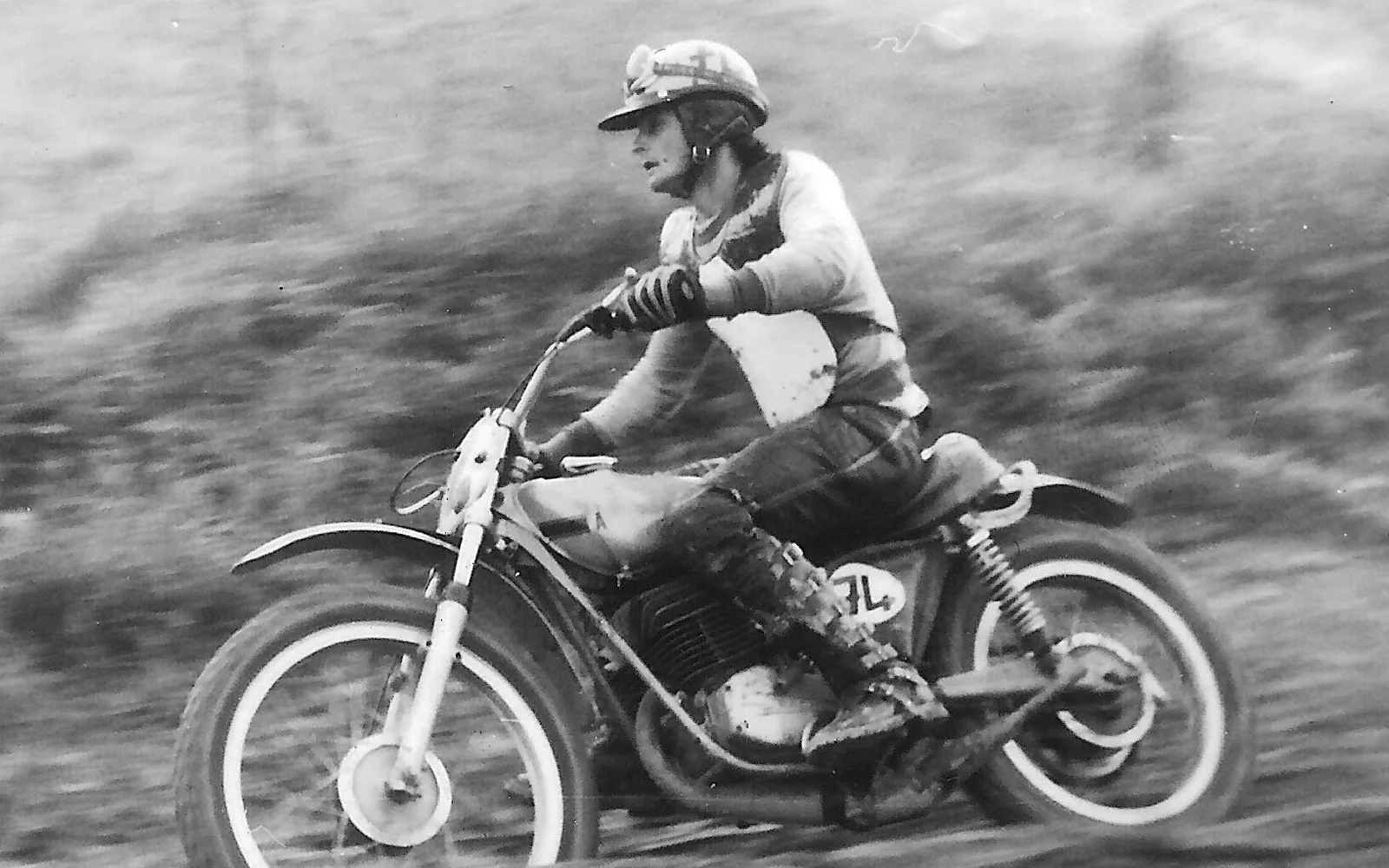
What made On Any Sunday land was its range. Brown did not pick one corner of the sport and drill into it. He showed the whole strange, sprawling family of motorcycling: the elbow-to-elbow violence of flat-track ovals, the flying chaos of motocross, the lonely madness of the Widowmaker hillclimb, the endurance grind of the ISDT, the wide-open speed of desert racing, and children barely tall enough to reach the pegs racing minibikes with total seriousness.
And crucially, he showed the people. Brown had a gift for character. He let the riders be funny, human, terrified and brave in turn. The racing was thrilling, but the film kept cutting back to the faces, the friendships, the small rituals, the way a rider laughs off a crash that should have hurt more. It refused the easy story of motorcycling as menace. Instead it insisted, gently and completely, that these were just people who loved something.
Remember what motorcycling meant to mainstream America in 1971. The dominant image was still The Wild One and the outlaw panic that followed it, the leather-jacketed threat rolling into a peaceful town. Motorcycles were danger, rebellion, other people's trouble.
On Any Sunday quietly dismantled that. It reached a huge general audience, earned an Academy Award nomination for Best Documentary Feature, and sent ordinary people, families, teenagers, weekend riders, out to buy bikes not to menace anyone but to feel what those three men felt on that beach. The off-road boom that followed owed the film an enormous debt. It made dirt riding aspirational and wholesome in a way no manufacturer's advertising ever had.
More than that, it built a template. Nearly every motorcycle film that matters since, from the sequels Bruce Brown's son Dana later directed to the modern flood of adventure documentaries, borrows its DNA: show the feeling, trust the riders, let the landscape breathe.
The specifics of On Any Sunday have aged, of course. The bikes are drum-braked and skinny-tyred, the safety gear is frighteningly optional, and the sport it captured has splintered and professionalised beyond recognition. None of that dulls it. Watch it today and the thing still works, because it was never really about the era or the equipment. It was about the reason any of us throw a leg over a bike in the first place.
That is why riders keep pressing it on non-riders. It is the film you show the friend who does not get it, the one who thinks motorcycles are just noise and risk. Ninety minutes later they understand, because On Any Sunday does the one thing that decades of persuasion cannot. It lets them see the grin.
More than fifty years on, on any given Sunday, somewhere near you, someone is loading a bike into a van at dawn to go ride in the dirt for the pure hell of it. Bruce Brown saw that impulse clearly, filmed it honestly, and handed it to the world. The bikes have changed. The reason has not.