Culture
On Any Sunday: The Film That Taught the World to Love Motorcycles
5 min read
No front brake, a steel shoe on your boot, and a left turn taken at over 130 mph with the bike sideways. This is flat track, the oldest form of American motorcycle racing and the purest test of throttle control there is.
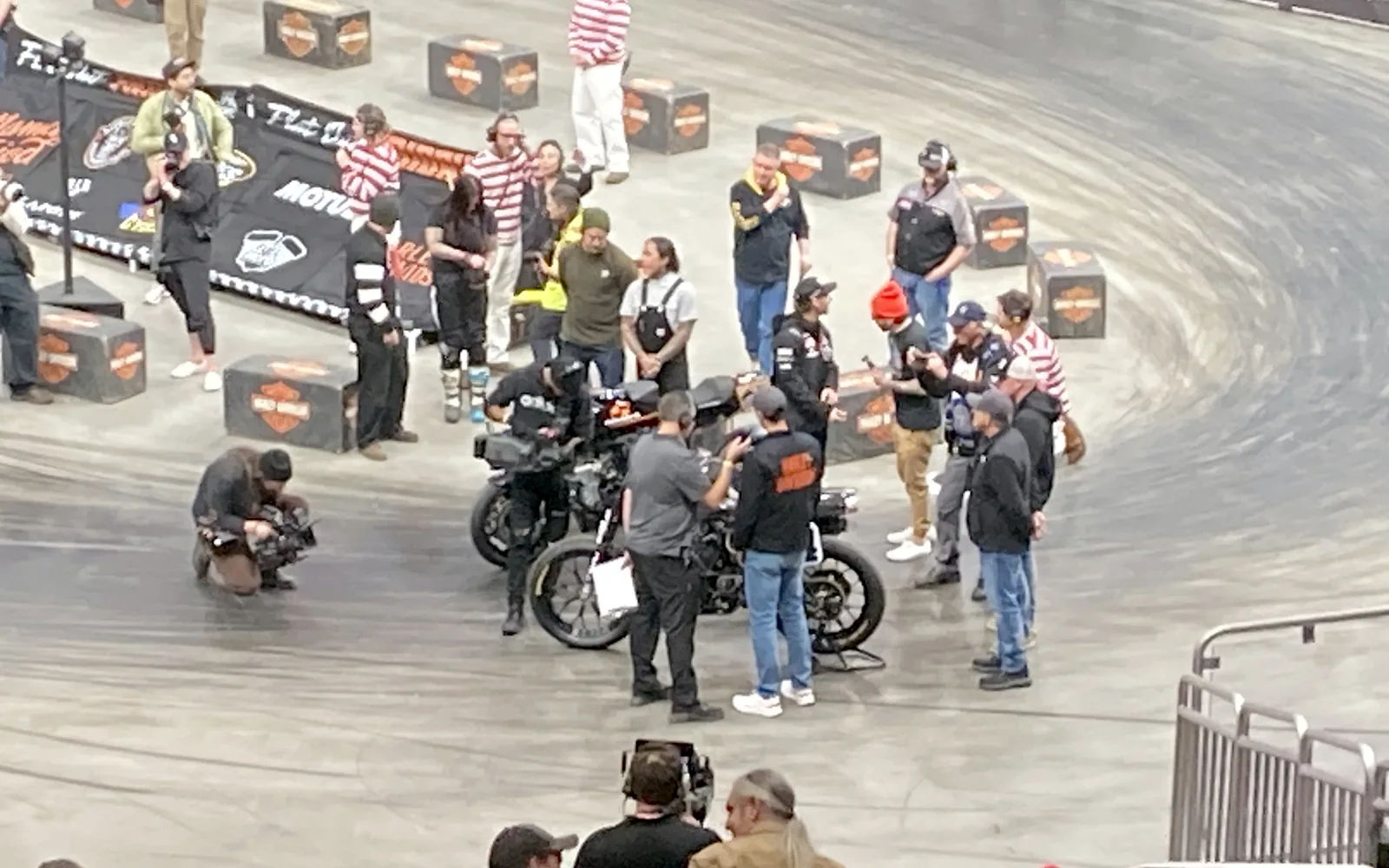
Picture a mile of groomed clay glowing under stadium lights, a wall of sound as a pack of stripped-down motorcycles funnels into turn one, and not a single front brake among them. The riders hang off the inside, left boots scraping the surface on a steel plate, back wheels spinning sideways in a controlled slide that looks, from the grandstand, like a slow-motion crash that somehow never happens. This is flat track, and it is the oldest, most stubbornly American way there is to race a motorcycle. It rewards none of the things modern bikes are built to do and everything a great rider is made of.
The format is brutally simple. Take an oval dirt track, point the bikes left, and see who can carry the most speed without falling off. There are variations, from the short tracks and the technical, jump-and-corner TT courses to the flat-out Miles, but the soul of it is the same everywhere: traction is scarce, the corners never end, and the only way through is to break the rear tyre loose on purpose and steer the whole motorcycle on the throttle.
Two details define the discipline for newcomers. First, traditional flat track bikes run no front brake at all, because in a corner taken as one long slide, grabbing a front brake is a fast route to the ground. Second, every rider wears a steel "hot shoe" over the left boot, a metal skid that lets them drag a foot and feel for grip as the bike pivots beneath them. On the big Mile ovals, riders do this at more than 130 mph, inches apart, trusting a slide they cannot see the end of.
Flat track is not a modern invention dressed up in heritage. It is close to the origin of American motorcycle sport itself. In the early 1900s, riders raced on steeply banked wooden board tracks and on the dirt horse-racing ovals that every American county fair already had. The board tracks were spectacular and lethal, and they faded, but the dirt ovals stayed. Racing motorcycles at the fairground became a fixture of American summers, woven into the same landscape as the county fair and the travelling show.
When the American Motorcyclist Association formalised its Grand National Championship in the 1950s, flat track was its beating heart. For decades the national number-one plate was decided across a mix of dirt-track disciplines, and to win it a rider had to master the short track, the half-mile, the Mile and the TT. It made flat track champions into complete motorcyclists, and it made the sport a genuine proving ground: this is the world a young Kenny Roberts came out of before he went to Europe and won grand prix world titles.
No bike is more bound up with flat track than the Harley-Davidson XR750. Introduced in 1970 and refined into its definitive alloy-engine form soon after, the XR750 became the weapon of choice on American dirt for a generation, one of the most successful racing motorcycles ever built. Its flat, insistent V-twin torque was perfectly suited to metering out grip on a loose surface, and it carried Harley to a run of dominance that made the Motor Company and flat track almost inseparable.
That dominance is exactly what made the modern era so thrilling. In 2017 Indian returned to the sport it had helped invent with the FTR750, a purpose-built V-twin racer, and with rider Jared Mees it rewrote the record books almost immediately. The old Harley-versus-Indian rivalry, a story as old as American motorcycling, came roaring back to life on the very ovals where it began. Suddenly flat track had its narrative again: two historic American brands, trading championships on the dirt.
Flat track hides nothing. There is no aerodynamics to help you, no electronics to save you, just a rider, a sliding tyre, and the nerve to keep the throttle open.
Because flat track is so unforgiving, the names who conquered it carry real weight. Scott Parker won nine Grand National titles aboard Harleys, a haul that made him the benchmark. Jay Springsteen, Chris Carr, and a long line of others built reputations on their ability to read a rutted, changing dirt surface lap after lap. And in the modern series, Jared Mees turned relentless consistency into a stack of championships that put him among the greats.
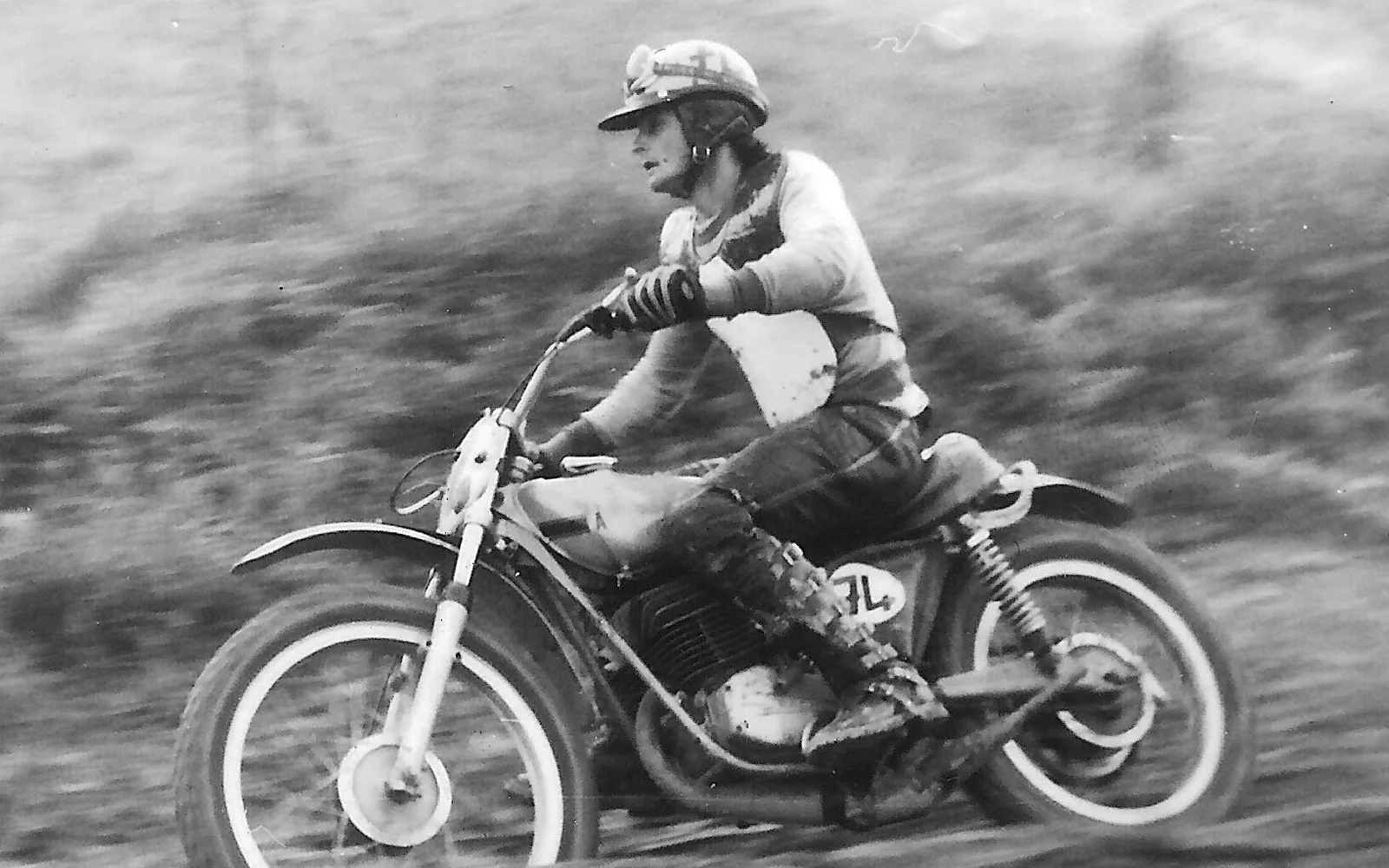
The wider world got its clearest look at this culture in 1971, when Bruce Brown's film On Any Sunday put dirt-track and desert racing on cinema screens and showed mainstream America what these riders actually did. For a lot of people, that film was the moment motorcycling stopped being an outlaw curiosity and became something aspirational, sideways, sunlit and joyful.
Flat track never became the biggest form of motorcycle racing, and that is part of its charm. It stayed close to its roots: county fairgrounds, family teams, riders who slide a motorcycle because their fathers did. Yet its influence is everywhere. The whole street-tracker styling movement, all those stripped, number-boarded custom bikes you see outside cafes, is a love letter to this sport. Manufacturers borrow its look constantly, because nothing signals honest, mechanical speed quite like a flat-track silhouette.
For a European rider, flat track can feel distant, an American ritual of clay and V-twins. But the discipline is spreading, with grassroots dirt-track scenes and training schools growing across Europe and drawing riders who want to relearn throttle control the hard, old way. If the café racer taught motorcycling to strip a bike down for the road, flat track taught it how to slide, and the two instincts have shaped custom culture ever since.
Watch one race, ideally a Mile, and you understand the appeal in about thirty seconds. It is loud, it is close, and it is utterly without pretence. In a sport that keeps getting more sophisticated, flat track remains a reminder of where all of it started: a dirt oval, a left turn, and a rider brave enough to take it flat out.