Culture
On Any Sunday: The Film That Taught the World to Love Motorcycles
5 min read
For one weekend each summer, a quiet corner of Drenthe becomes the beating heart of world motorcycling. This is the story of TT Assen, the only circuit to have held a Grand Prix every year since 1949.
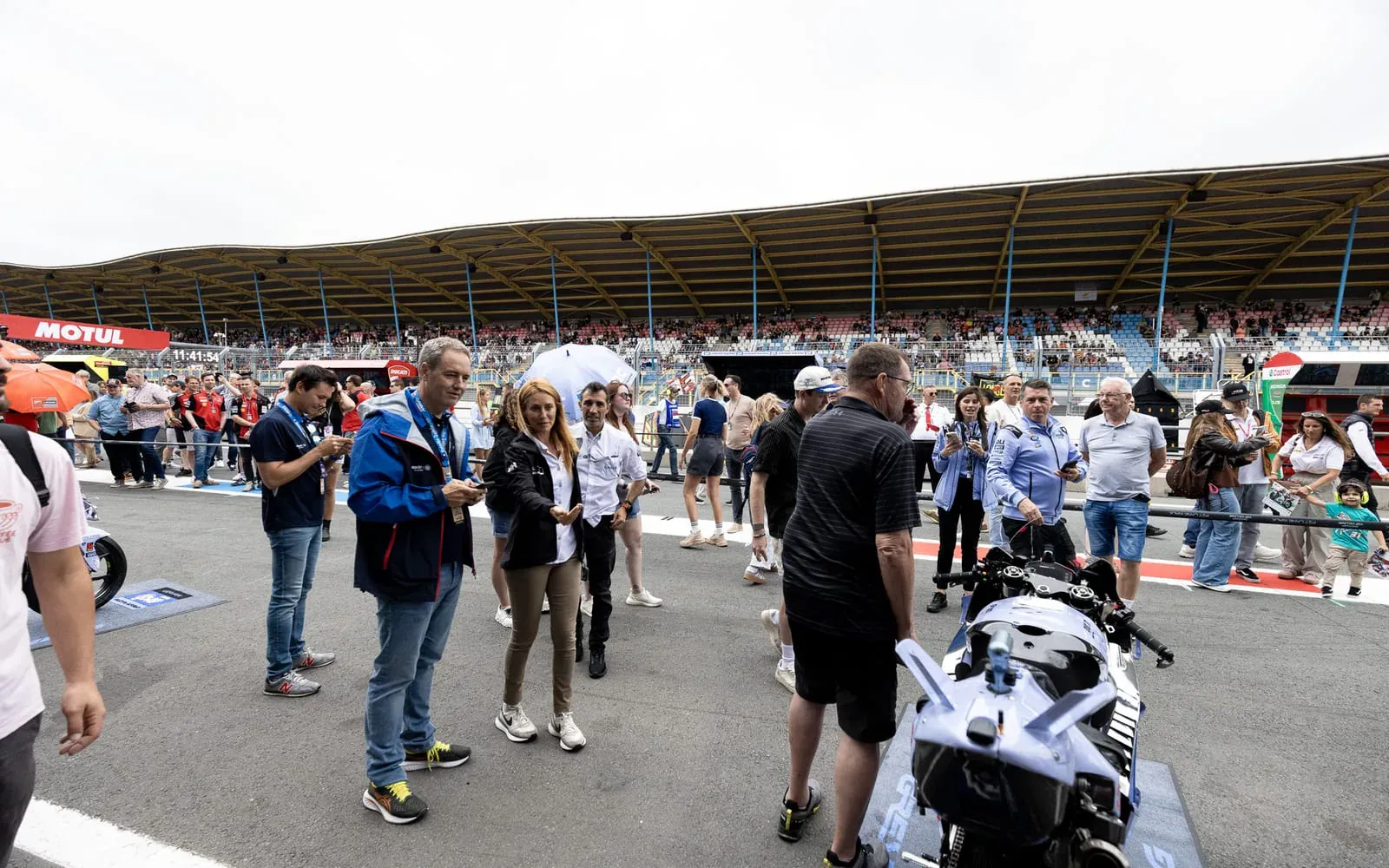
On the last Saturday of June, the flat farmland north of the German border does something strange. The roads into a town of barely seventy thousand people clog with motorcycles from every country in Europe. Campsites bloom in the fields. The air, for one long weekend, smells of two-stroke nostalgia, frying onions, and warm tarmac. And a grandstand with a distinctive wave in its roofline fills with a hundred thousand people who have come to worship at the place they call the Cathedral of Speed. This is Assen, and there is nowhere else in motorcycling quite like it.
You can love MotoGP and never fully understand the sport until you have stood at Assen. It is not the fastest circuit, nor the most glamorous. What it is, is the most sacred, and that word is not marketing. It has been earned, one racing summer at a time, for more than seventy years.
Here is the fact that sets Assen apart from every other track on earth. When the motorcycle World Championship was founded in 1949, the Dutch TT was on the very first calendar. And it has been on every single calendar since. Through the death of the two-stroke, the rise and fall of privateers, sponsorship booms and global recessions, one circuit has hosted a round of the premier class every year without exception. Assen is the only one. Not Monza, not the Sachsenring, not even the Isle of Man. Only Assen has never missed a year.
That continuity is why riders speak about the place with a reverence they reserve for almost nowhere else. To win at Assen is to write your name on the same wall as every great since the sport began. It is motorcycling's cathedral not because of the roof, but because the congregation has never once failed to gather.
The Dutch TT did not begin as a racetrack at all. The first races in 1925 were run on public roads around the villages of Rolde, Borger, and Schoonloo, a rough triangle of country lanes closed for the day. It was fast, it was dangerous, and the locals loved it. In 1955 the circuit moved to a permanent home on the edge of Assen, and over the decades the layout was shortened and refined, most dramatically in 2006 when the long northern loop was cut away to leave the tighter, 4.5-kilometre configuration used today.
Purists mourned that change, and some still do. But what survived the cutting is the thing that makes Assen special: a flowing, rhythmic ribbon of fast, cambered corners that rewards commitment and momentum over brute horsepower. The track was shaped by the character of road racing, all sweeping curves and off-camber surprises, and it still rides like a road, not a stadium. Riders describe getting into a trance-like flow here, one corner feeding the next, that few modern stop-and-go circuits allow.
Every great track has its holy ground, and Assen's is the final chicane, the GT chicane that flicks left-right onto the start-finish straight. It is the last chance to attack, the place where races are stolen in the final seconds, and it has produced some of the most famous last-lap moves in the sport's history.
Ask any long-time fan about Assen and eventually they will mention 2015: Valentino Rossi and Marc Márquez, wheel to wheel into that final chicane on the last lap, Rossi running wide across the gravel and emerging still ahead, a move argued about in bars from Bologna to Barcelona to this day. That is what Assen produces. The layout does not let anyone hide. It forces the drama out into the open, corner after corner, until someone breaks.
To understand Assen, though, you have to look away from the track and into the campsites. The Dutch TT is as much a festival as a race. The tradition of TT Night, when the town centre of Assen becomes an enormous open-air party the evening before the race, draws crowds that dwarf the grandstands. For the Dutch, and for the tens of thousands who ride in from Germany, Belgium, Britain and beyond, the weekend is a rite of the motorcycling summer, a gathering of the tribe.
If you ride, and you can get there, you should, at least once. Point your bike north across the Netherlands, past Groningen, into the quiet green of Drenthe, and join the river of machines flowing toward the noise. You do not need a grandstand ticket to feel it. The pilgrimage is the point. For one weekend, a small Dutch town becomes the centre of the motorcycling world, and standing in that crowd, you understand at last why they call it a cathedral.
The Dutch TT is typically held in late June, and Assen sits within easy reach of the great riding country of the German border. If you are building a longer trip around it, our guide to the best motorcycle roads within reach of the Netherlands pairs perfectly with a weekend at the circuit: race on Saturday, ride the Eifel on Sunday. Book accommodation early, the town fills months ahead, and remember that half the joy is the journey there.