Culture
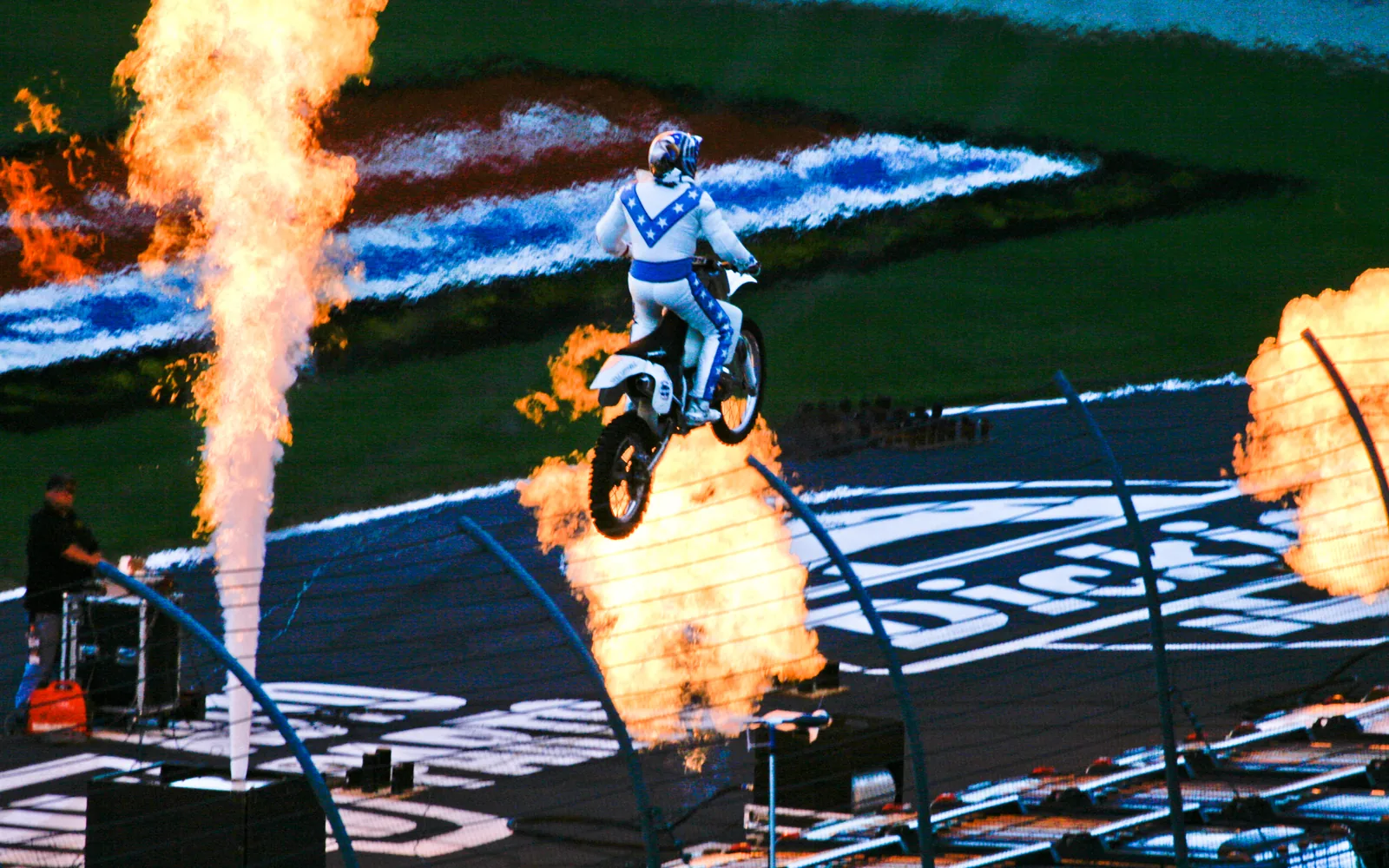
Evel Knievel: The Man Who Turned Falling Off Into an Art Form
5 min read
A rowdy July weekend in a small California town, a staged magazine photo, and one leather-jacketed movie star. The tangled true story of how the outlaw biker image was born, and why a Triumph, not a Harley, sat under the most famous rebel in cinema.
A man in a leather jacket sits astride a motorcycle, cap tilted forward, eyes half-lidded with contempt for everything and everyone. A girl asks him the question that will echo through the next seventy years of popular culture. "What are you rebelling against, Johnny?" He barely moves. "Whaddya got?"
That exchange, from a 1953 film that was neither a hit nor much good, did something no motorcycle advertisement ever managed. It fixed an image in the public mind so hard that it has never come loose: the biker as outlaw, as danger, as rebel in black leather. Almost everything the world thinks it knows about "biker culture," the menace and the glamour both, traces back to a tangled chain of events that begins not in Hollywood but in a dusty little farm town in California, over a beer-soaked holiday weekend in the summer of 1947.
Every year over the Fourth of July, the small agricultural town of Hollister hosted a motorcycle rally, an American Motorcyclist Association sanctioned gathering of races and hillclimbs that had been a fixture before the war. In 1947, with servicemen home and hungry for the freedom of two wheels, it got much bigger than anyone planned. Estimates vary, but somewhere around 4,000 riders poured into a town of a few thousand people, far more than its handful of bars and its tiny police force could comfortably hold.
What followed was, by the honest accounts, a rowdy party rather than a riot. There was a great deal of drinking. There was racing in the streets. There were arrests, mostly for public drunkenness, and some minor injuries, and a lot of noise and broken bottles. Nobody was killed. The town was not, whatever the legend says, terrorised or laid to waste. By Monday the riders had gone home and Hollister was sweeping up.
But a story was already forming that would prove far more durable than the truth.
On 21 July 1947, Life magazine, then the most widely read publication in America, ran a full-page photograph. A heavyset man slumps drunkenly on a Harley-Davidson, a beer bottle in each hand, more bottles littering the ground beneath his wheels. The caption told readers that this was the aftermath of a motorcycle gang's assault on a helpless town.
The image was electric, and almost certainly staged. The photographer, working for a San Francisco paper, appears to have arranged the scene, and the bottles were likely swept into place for effect. It did not matter. The picture went everywhere. In one frame it gave frightened middle-class America a face to fear, and it gave the emerging biker world an image it would spend decades both fighting and, in some corners, gleefully embracing.
Out of the panic came a phrase that outlaw motorcyclists still wear on their jackets today. As the story goes, in the wake of Hollister the AMA moved to reassure the public, declaring that the overwhelming majority of motorcyclists were decent, law-abiding citizens, and that the trouble came from a tiny minority, perhaps one percent.
The AMA has since said it has no record of ever making that statement, which makes it one of motorcycling's most enduring myths. But the outlaw clubs seized on it anyway. They began calling themselves "one-percenters," stitching a diamond-shaped "1%" patch onto their colours, turning an insult into a badge of pride. The very act of exclusion created an identity. If straight society said the wild ones were one percent, then one percent is exactly what they would be.
A rowdy party, a staged photograph and a phrase nobody can prove was ever said. On those three shaky foundations the entire mythology of the outlaw biker was built.
A writer named Frank Rooney read about Hollister and, in 1951, published a short story called "Cyclists' Raid" in Harper's, a dark, fictionalised account of a motorcycle gang descending on a small town. Hollywood, always hunting for the next fear to sell, bought the idea. In 1953 producer Stanley Kramer and director László Benedek turned it into The Wild One.
Marlon Brando, then the most magnetic young actor alive, played Johnny Strabler, the brooding leader of the Black Rebels Motorcycle Club. Lee Marvin played his rival Chino. The plot was thin and the moralising heavy, and censors on both sides of the Atlantic recoiled: British authorities banned the film outright for fourteen years, fearing it would inspire exactly the youth rebellion it depicted.
They need not have worried about the plot. It was the look that landed. Brando in a black Perfecto leather jacket, cap askew, jeans and boots, slouched over his handlebars, became an instant and permanent icon of cool. Rockers in Britain, greasers in America, rebels everywhere took their cue from that single silhouette. The leather jacket, from that moment, meant something.
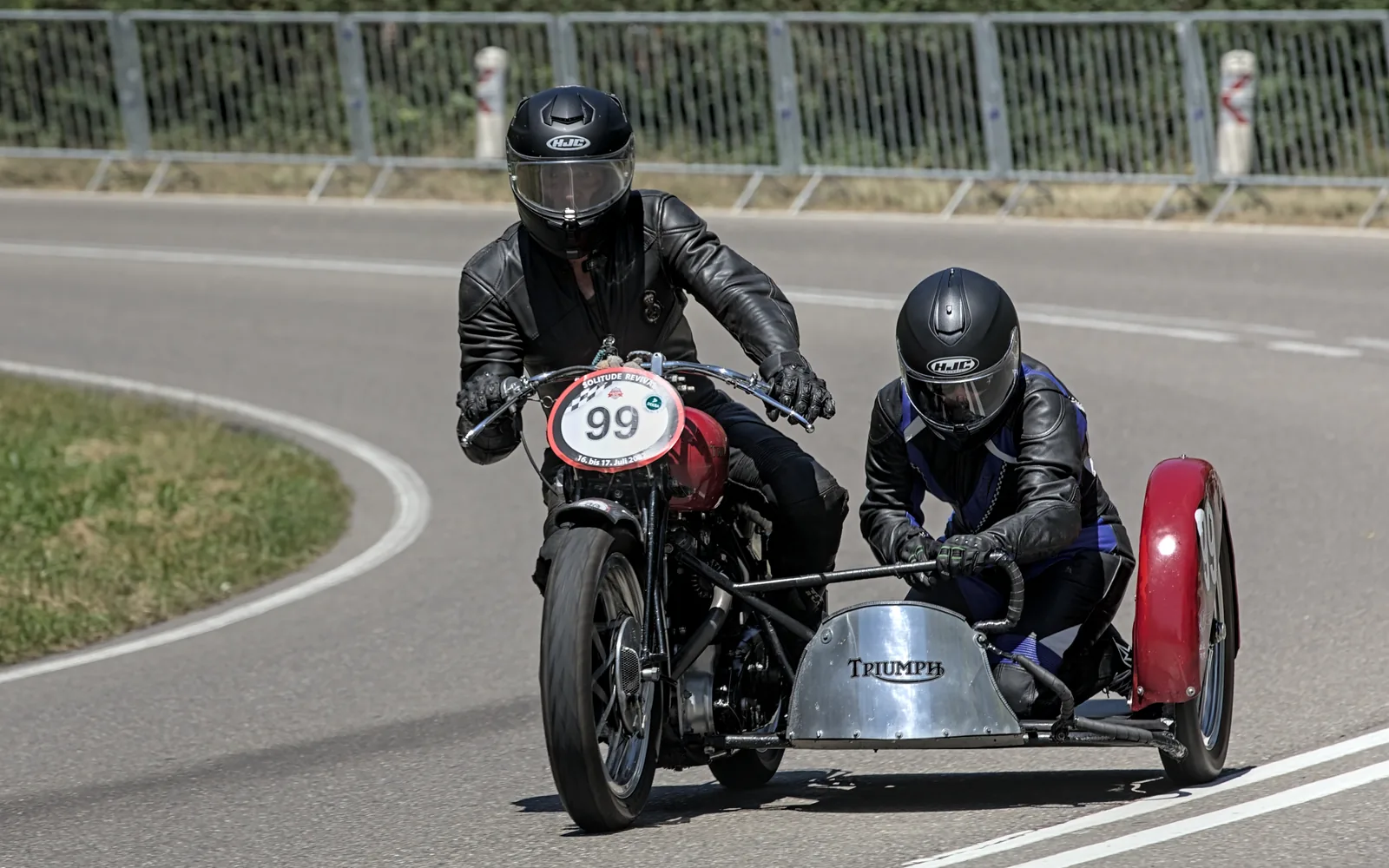
Here is the detail that motorcyclists love, and that most people miss. The bike Brando rides in The Wild One, the machine beneath the most famous outlaw in film history, is not a Harley-Davidson. It is a Triumph, a 1950 Thunderbird 6T, a 650cc British twin. It was Brando's own motorcycle, and he rode it in the film.
The irony is delicious. A movie that terrified America about home-grown motorcycle gangs handed its starring role to a British parallel-twin, and in doing so helped make Triumph the aspirational cool-kid marque in the United States for a generation. Lee Marvin's Chino, the scruffier antagonist, rode the Harley. The hero-villain got the Triumph. Sales followed the star. It is one of the great accidental product placements in history, and it is pure vintage-Triumph legend, the same lineage that runs through the whole story of the cafe racer and the British twins that defined an era.
Strip away the myth and the Hollister weekend was a minor event that got out of hand and was then wildly inflated by a hungry press. But myths, once cast, take on a life the facts can never reclaim. The staged photo, the disputed one-percent line, and Brando's leather jacket fused into something bigger than any of them: a whole idea of what a motorcyclist is.
That idea has been a mixed inheritance. It gave the world the romance of the open-road rebel, the outsider on two wheels, an image that still sells films, jackets and motorcycles. It also saddled everyday riders with a menace they never earned, a suspicion at the roadside and the insurance office that lingers to this day. Most people who love motorcycles are, and always were, the ninety-nine percent: commuters, tourers, tinkerers, weekend riders.
But every subculture needs an origin story, and this is ours, messy and half-true and unforgettable. A small town, a hot weekend, a photograph that lied, and a young man on a British twin who answered a simple question with two words that never stopped echoing. Whaddya got.