Culture
The World's Fastest Indian: How Burt Munro Chased 200 mph on a Homemade Machine
7 min read
A wooden barrel, a vintage Indian Scout, and a rider circling a vertical wall with no net and no harness. The Wall of Death is over a century old and still one of the most extraordinary things you can watch a motorcycle do.
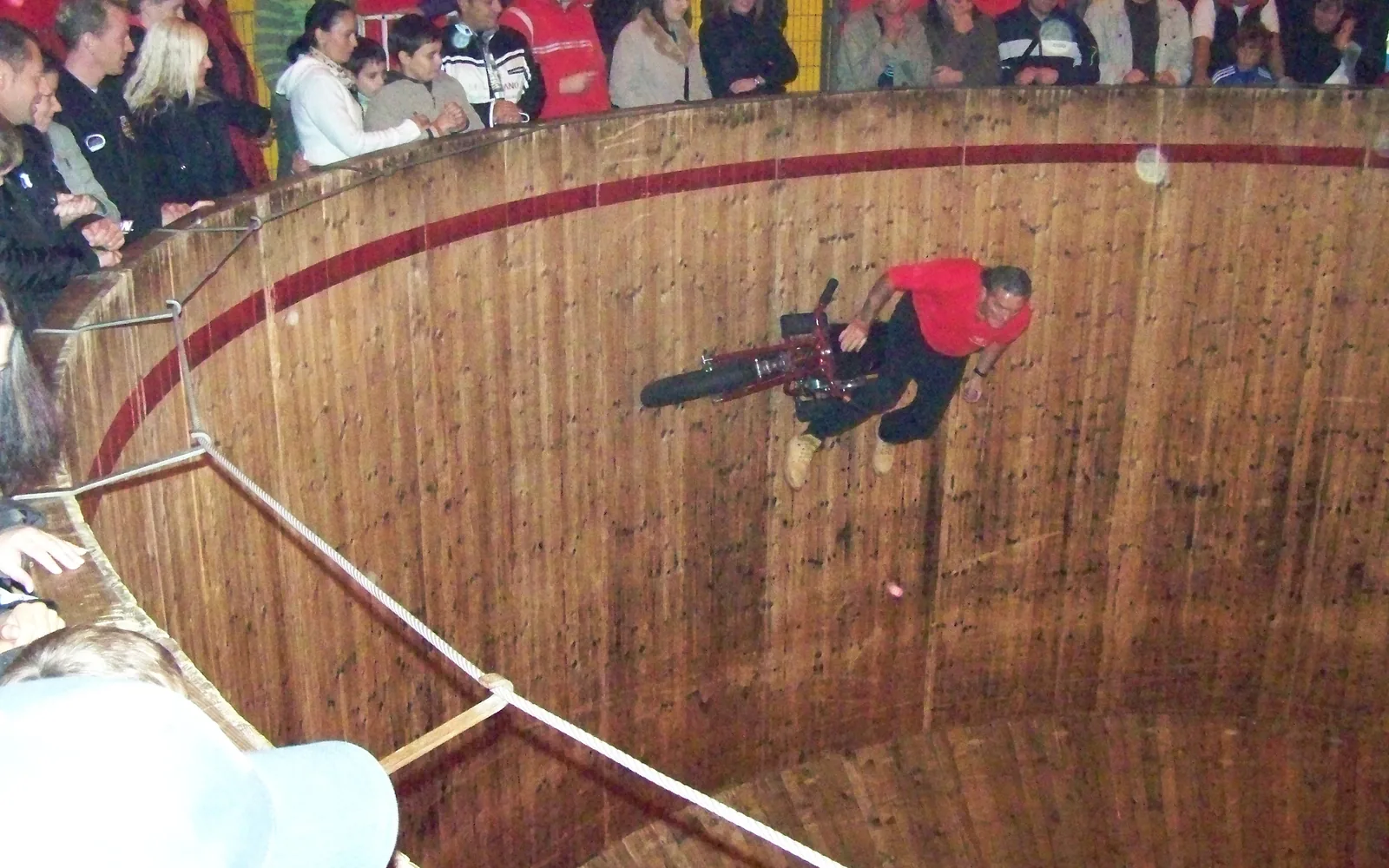
The first thing that hits you is the smell: hot oil, old wood, and exhaust, trapped inside a giant wooden barrel. Then the noise, an engine winding up somewhere below you as the crowd leans over a rail at the top of the drum. And then, impossibly, a motorcycle climbs the vertical wall and starts circling at head height, the rider upright and calm, riding a surface that by every instinct you own should throw them straight to the floor. This is the Wall of Death, and it is one of the oldest, strangest, and most purely thrilling things a motorcycle has ever been made to do.
Strip away the showmanship and the Wall of Death is a physics demonstration you can feel in your chest. The "wall" is a cylindrical wooden drum, usually somewhere between six and ten metres across, with a vertical inner surface. A rider enters on a banked lip at the bottom, builds speed, and rides up onto the vertical section, where the machine runs horizontally around the inside of the barrel while the rider sits perpendicular to the ground.
What holds them there is not magic and not, strictly, speed alone. It is friction. As the bike circles, the wall pushes inward on the tyres, and that inward force is what bends the rider's path into a circle. Friction between rubber and timber does the rest, stopping the bike from sliding down. Go fast enough and the whole system locks into a stable state, the rider pinned to the wall by forces that can reach several times their own bodyweight. Slow down too much and the grip fails. There is no net, no harness, and on a traditional wall, no front brake worth the name. The margin is real, and everyone in the drum knows it.
The Wall of Death did not appear from nowhere. It grew out of the "motordromes" of the early 1900s, the steeply banked wooden board tracks where early motorcycles raced at terrifying speeds. Those tracks were beautiful and lethal, and as public taste and safety caught up with them, showmen took the same idea and stood it upright. By the 1910s and 1920s, vertical-walled drums were drawing crowds at American amusement parks, Coney Island among them, and the act crossed the Atlantic to become a fixture of British and European travelling fairs.
The name did the marketing. "Wall of Death" is exactly the kind of lurid promise a fairground barker could sell, and the reality mostly lived up to it. For decades the drum was a staple of the fair, its riders part daredevil, part mechanic, part carnival performer, collecting notes from the hands of spectators leaning over the top rail as they thundered past inches away.
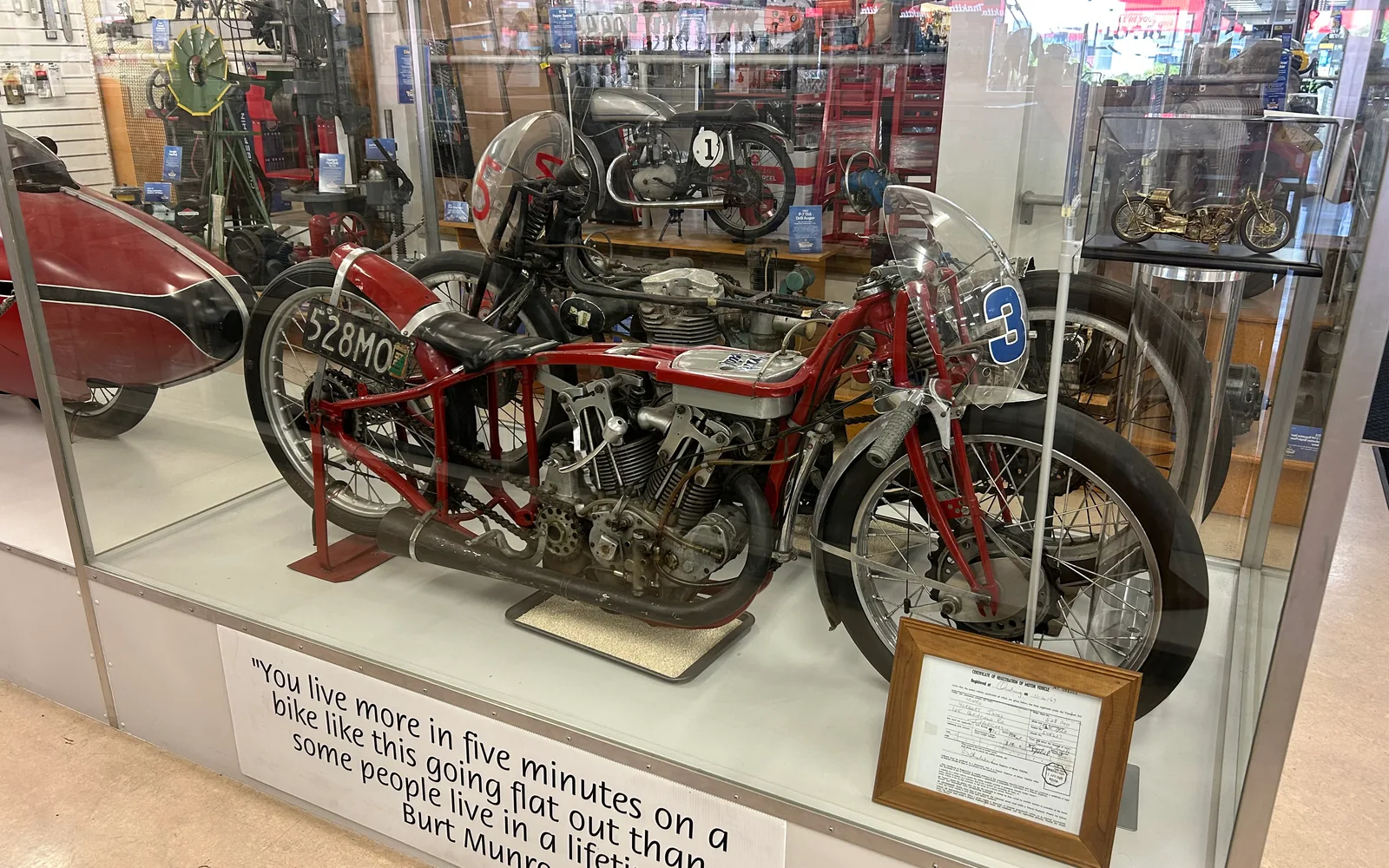
Ask a Wall of Death rider what they want under them and the answer, more often than not, is a vintage Indian Scout, especially the 101 Scout built in the late 1920s and early 1930s. There is a reason the same eighty- and ninety-year-old machines are still turning inside these drums today. The 101 Scout was famous for its low, planted, beautifully predictable handling, exactly the qualities you want on a vertical wall where a wobble is not an option. Small Harleys, British singles and, later, go-karts and other machines have all done their turn, but the low-slung Indian remains the icon of the act, its flathead V-twin note the soundtrack of the drum.
On the Wall of Death, the motorcycle is not transport and it is not sport. It is a partner in a piece of theatre where the stakes are absolutely genuine.
The Wall of Death survived because families refused to let it die. In Britain especially, a handful of troupes carried the tradition through generation after generation, maintaining the drums, restoring the ancient bikes, and teaching new riders the terrifying craft of trusting a wooden wall. Names like the Messham and Fox families became synonymous with the act, their portable walls appearing at fairs, festivals and shows, keeping alive a skill that cannot be learned from a book.
Part of what they preserved is the sheer nerve of the performance. Riders take their hands off the bars, ride sidesaddle, stack two or three machines onto the wall at once, and in the golden age even shared the drum with lions in a sidecar. Strip out the spectacle and it is still just a person, an old motorcycle, and a set of physical laws that will not forgive a mistake.
You might expect an act this old and this dangerous to have quietly died out. It has not. The Wall of Death has found a second life at custom-bike shows, music festivals and vintage gatherings, where an audience raised on screens is genuinely stunned by something this raw and this real happening a few feet away. The tradition even drew a modern speed record when British rider and mechanic Guy Martin took on a purpose-built giant wall in 2016 and circled it at close to 80 mph, subjecting himself to punishing g-forces in the process, and reminding everyone just how much physics the act is really wrestling with.
There is something about the Wall of Death that speaks to the same thing at the root of all motorcycling: the strange joy of using balance, nerve and an engine to do something that looks impossible. The Isle of Man TT does it at 130 mph on public roads. The Wall of Death does it in a wooden barrel the size of a small room, at the fair, close enough to touch. Both come from the same place. If one ever rolls into a town near you, pay your money, climb the steps, and lean over the rail. You will not forget the moment the bike leaves the floor.