Guide
How to Winterize Your Motorcycle: The Complete Storage Guide
6 min read
A practical, no-nonsense motorcycle maintenance guide: the checks, fluids, and service intervals that keep your bike safe, reliable, and worth more when you sell it.
A motorcycle tells you everything you need to know, if you bother to listen. The dry rasp of a chain that wants oil. The slightly longer pull at the lever when pads are tired. The hesitation on a cold start that says the battery is on its way out. Most breakdowns do not arrive out of nowhere. They announce themselves for weeks, politely, and we ride straight past the warning.
This guide is about learning to hear those signals, and about the small, regular habits that stop them turning into a roadside phone call. You do not need a workshop or a lift or a snap-on toolbox. Half of what keeps a bike healthy costs nothing but ten minutes and a bit of attention. The rest is cheap insurance. Whether you have just collected your first motorcycle or your tenth, the fundamentals are the same, and they are worth getting right.
Before every ride, walk around the bike once. Riders who have done it for years call it different things, but the checklist is universal and it is fast.
Tyres first. Press a thumb into each one; if it gives easily, it needs air. Check pressures properly with a gauge at least once a week, because a tyre can lose a few PSI a month just sitting there, and correct pressure is the single biggest free upgrade to how your bike grips, steers, and stops. Look for nails, cuts, and uneven wear while you are down there.
Then lights, levers, and leaks. Flick the indicators, brake light, and headlight. Squeeze both brakes and feel for a firm bite, not a spongy pull that comes all the way to the bar. Glance under the bike for fresh drips of oil or coolant. None of this takes longer than waiting for a kettle to boil, and it catches the problems that ruin a ride.
If your bike has a chain, this is where most neglect shows up. A dry, sagging chain wears itself and your sprockets into scrap, robs you of power, and in the worst case can lock a rear wheel. Looking after it is almost embarrassingly simple.
Clean and lube the chain every 500 to 600 km, and always after riding in the rain. Put the bike on a stand or paddock stand, spin the wheel slowly, and work a chain cleaner or paraffin into the rollers with a brush. Wipe it dry, then apply chain lube to the inside of the chain run so centrifugal force carries it outward as you ride. Let it sit for a few minutes before you set off so it does not fling straight onto your wheel.
Check chain slack too. Most bikes want around 25 to 35 mm of vertical play at the midpoint of the lower run, but always use the figure in your owner's manual, because it varies. Too tight is more dangerous than too loose; it strains the gearbox output bearing and can snatch under suspension travel.
Engine oil does more than lubricate. It cools, it cleans, and it carries away the tiny metal particles that every engine sheds. Old oil stops doing all three. Change it at the interval in your manual, typically every 5,000 to 10,000 km depending on the bike, and change the filter with it.
Between changes, check the level. On most bikes that means the sight glass or dipstick with the bike upright and level, engine warm but switched off for a minute. Top up with the exact grade your manufacturer specifies, because a modern wet clutch is fussy about oil and the wrong spec can make it slip. If the oil on the dipstick looks like black treacle and smells burnt, it is overdue.
Brake pads are a wear item, and they are not the place to economise on attention. Most pads have a wear groove or a minimum thickness marked; once the friction material is down to around 1.5 to 2 mm, replace them. Listen for a metallic squeal, which is often a built-in wear indicator telling you the same thing.
Brake and clutch fluid absorbs water over time, which lowers its boiling point and gives you that frightening soft lever on a long descent. Flush and replace it every two years regardless of mileage. Coolant, on a liquid-cooled bike, wants changing on a similar schedule. None of these are glamorous jobs, but they are the difference between a bike that stops when you ask and one that argues.
A motorcycle battery hates two things: heat and sitting unused. Modern bikes draw a small standby current even when switched off, so a bike left for a few weeks can wake up flat. If you do not ride daily, a smart trickle charger, often called a tender, is the best fifty euros you will spend. It tops the battery up and keeps it healthy without overcharging.
Keep the terminals clean and tight, and a smear of dielectric grease keeps corrosion away. If your bike cranks slowly on cold mornings or the dash flickers, suspect the battery before anything more dramatic.
Use this as a starting point, then defer to your owner's manual, which always wins on specifics.
| Item | Check | Replace / service |
|---|---|---|
| Tyre pressure | Weekly | When worn or damaged |
| Chain clean & lube | Every 500-600 km | Chain at ~25,000-30,000 km |
| Engine oil & filter | Level monthly | Every 5,000-10,000 km |
| Brake pads | Every few rides | At ~1.5-2 mm material |
| Brake & clutch fluid | Visual, every ride | Every 2 years |
| Coolant | Level monthly | Every 2 years |
| Air filter | At each service | Per manual (often ~15,000 km) |
| Spark plugs | At each service | Per manual |
| Battery | Voltage monthly | When cranking weakens |
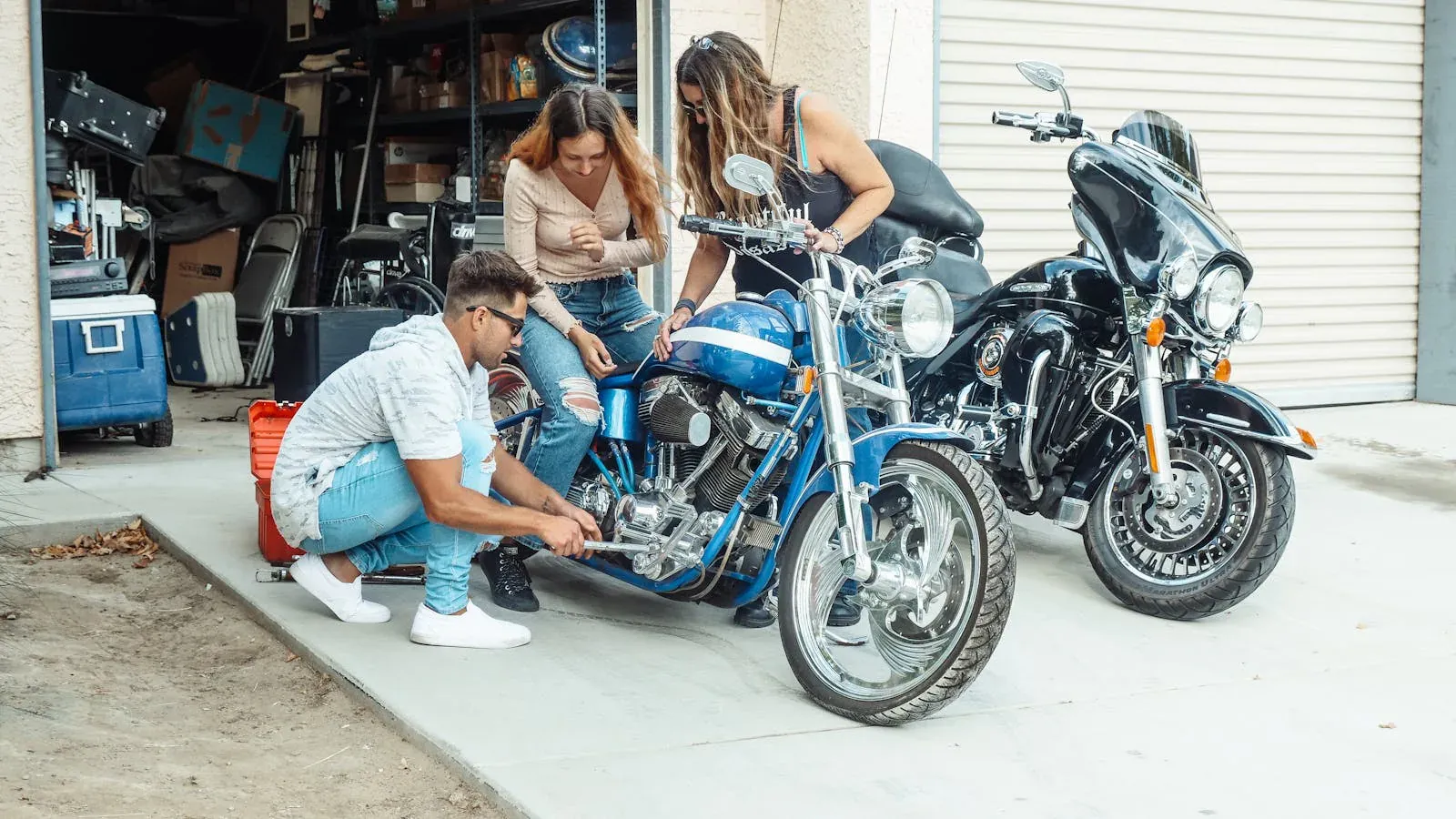
There is real satisfaction in maintaining your own bike, and most of the list above is genuinely beginner-friendly with a basic toolkit and a torque wrench. Chain care, oil changes, pad swaps, and pressure checks are all within reach of a careful owner and a quiet afternoon.
But be honest about the line. Anything safety-critical that you are unsure of, brake bleeding, valve clearances, fork seals, electrical faults you cannot trace, belongs with a competent mechanic. A good independent shop is worth its weight, and a documented service history pays you back the day you sell. There is no shame in handing over the jobs that are above your confidence; the shame is in guessing on the parts that keep you alive at speed.
The bike asks for different things at different times of year. Cold storage, damp, salt, and heat each bring their own demands, which is why it pays to run through a proper checklist as the weather turns. We have written a full guide for each season: how to winterize your motorcycle before it sleeps, how to wake it for spring, how to keep it cool through summer, and how to ready it for autumn.
Maintenance is not a chore you do to a motorcycle. It is a conversation you have with it. Keep up your end, and a well-kept bike will give you years of starts on the button, brakes that bite, and the quiet confidence that comes from knowing your machine is ready for whatever the road throws at it. If you are still choosing that machine, our bike finder can point you toward one that suits how, and how often, you ride.