News
2026 BMW R 12 G/S: The R 80 G/S Reborn, and More Capable Than It Looks
6 min read
Named for a teenager who won a desert race in 1960, the Bear 650 is Royal Enfield's most characterful 650 yet. A scrambler that's honest about what it is, and better for it.
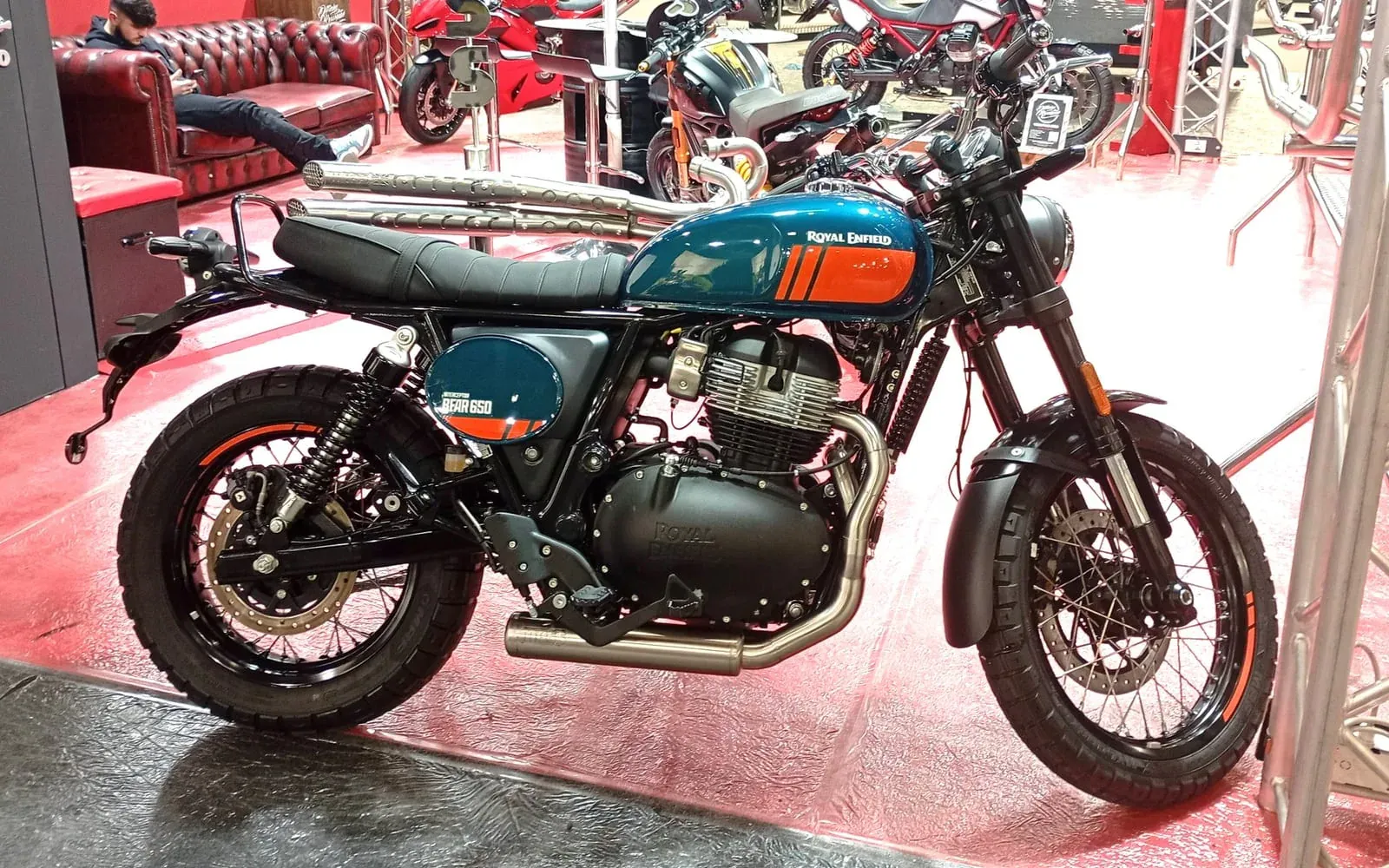
The name is the best story Royal Enfield has told in years, and it happens to be true. In 1960, a sixteen-year-old named Eddie Mulder entered the Big Bear Run, a brutal 150-mile desert hare-and-hound race across the California scrub, on a Royal Enfield. He finished sixth against a field of hardened factory riders on bigger machinery, and the plucky underdog result became a piece of the brand's American folklore. Sixty-five years later, the Bear 650 carries that boy's race into the showroom. It is a scrambler built on a good story, and, more importantly, on a good motorcycle.
Royal Enfield has been on a remarkable run with its 648cc parallel twin. The Interceptor and Continental GT made it famous by being cheap, charming, and honest. The Bear takes that same platform and scrambles it, and in doing so becomes arguably the most desirable of the lot.
Let us be clear about the brief, because Royal Enfield refreshingly is. The Bear 650 is a scrambler in the style and spirit of one, not a serious off-road weapon. It is the Interceptor 650 reworked with genuine intent rather than a set of stickers, and the changes are more than skin deep.
At its heart sits the familiar air-and-oil-cooled 648cc parallel twin, but here it breathes through a new free-flowing two-into-one exhaust that lifts torque by a claimed eight percent. The numbers are modest and honestly stated: around 47 hp at 7,250 rpm and 56.5 Nm of torque at 5,150 rpm. What matters is where that torque lives. It is a low, thumpy, early-arriving shove that suits a scrambler's character perfectly, the kind of engine that ambles rather than screams, and is all the more likeable for it.
Because it makes 47 hp, the Bear slips neatly under the 35 kW A2 licence ceiling, which makes it one of the more charismatic bikes a newer rider can legally own from day one.
This is where the Bear earns its name rather than just borrowing it. Compared to the road-going Interceptor, Royal Enfield fitted:
The result is a bike that looks and feels like a scrambler where it counts. The tall, wide bars and the upright seating make it a commanding thing to ride around town and down a gravel farm track, even if nobody should mistake it for a Ténéré when the going gets genuinely rough.
The honest catches are the ones you would expect, and Royal Enfield does not hide them. At roughly 216 kg wet, the Bear is not light, and you feel that weight at walking pace and when you pick it off the sidestand. The 830mm seat is taller than the low-slung Interceptor's, a deliberate scrambler trait that will suit average and taller riders but give shorter ones pause. And 47 hp, while ample for the character, means motorway overtakes want a little planning.
None of that undoes the appeal, because the Bear's charm is not about outright pace. It is about the way it looks parked outside a café, the thump of that twin at low revs, the genuinely lovely retro-modern TFT-and-analogue instrument, and a build quality that has climbed a long way from the brand's rattly reputation of a decade ago.
Here is the figure that reframes everything: the Bear 650 starts at around $6,849 in the US, and in the Netherlands it lists from €9,399. In a market where a mid-capacity twin from the establishment can cost half as much again, Royal Enfield is offering real style, a genuine engine, and Showa suspension for the price of a well-specced 400. That value has been the brand's whole strategy, and the Bear is its most tempting expression yet.
| Spec | Detail |
|---|---|
| Engine | 648cc air/oil-cooled parallel twin, 270° crank |
| Power | ~47 hp (35 kW) @ 7,250 rpm |
| Torque | 56.5 Nm @ 5,150 rpm |
| Weight | ~216 kg (wet) |
| Seat height | 830mm |
| Fuel capacity | 13.7 litres |
| Front suspension | 43mm Showa USD fork |
| Brakes | 320mm front / 270mm rear discs, ByBre, ABS |
| Licence | A2 eligible |
| Price | from ~$6,849 / €9,399 |
If you want a machine that is honest about what it is, a stylish, torquey, easy-going twin with a real story and a fair price, the Bear 650 is one of the most likeable bikes Royal Enfield has ever built. It will not win a drag race or a desert enduro, and it never claims it will. What it offers instead is character per euro, and on that metric almost nothing touches it. We have added the Bear to our motorcycle leaderboard; pair it with our guide to the best beginner motorcycles of 2026 if this is your first big bike.